
GPU Cluster Power: Why Renders Finish in Seconds
Ever wondered why some 3D projects take hours, while others finish fast? The answer often lies in the hardware. Moving beyond standard workstations can unlock unprecedented efficiency in your creative work.
Modern ai girl GPU clusters offer the power needed for heavy visual data. This tech changes your production space, making render speed lightning-fast. It’s a game-changer for solo artists.
Using these advanced systems means no more waiting for progress bars. You can dive into your next big idea right away. This guide will help you build a top-notch setup. It turns long computation hours into seconds.
Key Takeaways
- High-performance computing drastically reduces project turnaround times.
- Parallel processing allows multiple tasks to run simultaneously for better efficiency.
- Upgrading your hardware architecture is essential for modern visual production.
- Professional-grade environments eliminate the bottleneck of slow rendering.
- Optimizing your workflow leads to more creative freedom and faster delivery.
Understanding the Architecture of AI Girl GPU Clusters
To grasp how your renders finish quickly, you need to understand the hardware of ai girl GPU clusters. These systems are designed to handle huge data loads that would crash a regular computer. They use a network of high-performance cards to change how creative pros do GPU rendering.
The Role of Parallel Processing in Modern Rendering
Modern render engines like Redshift and Octane are made for parallel processing. They split complex scenes into thousands of tasks. A GPU cluster spreads these tasks across thousands of cores at once, making every pixel calculation much faster.
This parallelism means you get instant feedback during your work. No more waiting hours to see how changes affect your scene. By using a specialized setup, your local machine stays free for other tasks.
Why Specialized Clusters Outperform Local Workstations
A high-end local workstation is powerful, but it can’t beat a dedicated server farm. A 20-node cluster with RTX 5090 cards has a computing power that’s hard to match on one desk. This setup makes scaling easy, whether you’re working on one frame or a whole animation.
| Feature | Local Workstation | 20-Node GPU Cluster |
|---|---|---|
| Processing Cores | Limited (Single GPU) | Massive (Distributed) |
| Render Speed | Baseline | Up to 20x Faster |
| Memory Capacity | Restricted by VRAM | High-Speed Shared Pool |
| Scalability | None | Highly Flexible |
Picking the right setup is key to staying ahead in your work. Moving heavy tasks to a GPU cluster means your hardware won’t slow you down. This change is crucial for faster, more efficient GPU rendering in your future projects.
Preparing Your Project Files for Distributed Rendering
Switching to a cluster environment changes how you manage your project files. You need a new approach for distributed rendering when working on a network. Making sure each node gets your scene right is key.
Optimizing Scene Geometry and Texture Assets
Render failures often happen when nodes run out of VRAM. Simplify your scene by using proxy objects or instances. Remove high-polygon meshes not seen by the camera to save memory.
Texture management is also crucial. Use efficient formats like EXR or tiled textures to reduce memory use. This keeps your distributed rendering smooth.
Managing Dependencies and External Plugins
Consistency is vital for a successful render on multiple machines. If a node misses a plugin or script, the whole frame might fail. Make sure all external dependencies are ready or shared on the network.
Use relative file paths to avoid broken links. This lets the cluster find assets, no matter the drive mapping. Here’s a table with steps for getting your project files ready for distributed rendering.
| Task Category | Action Required | Benefit |
|---|---|---|
| Geometry | Use Proxy Objects | Lower VRAM usage |
| Textures | Convert to Tiled EXR | Faster loading times |
| Plugins | Verify Version Sync | Prevents render errors |
| Paths | Set Relative Linking | Ensures asset visibility |
Selecting the Right Infrastructure for Your Needs
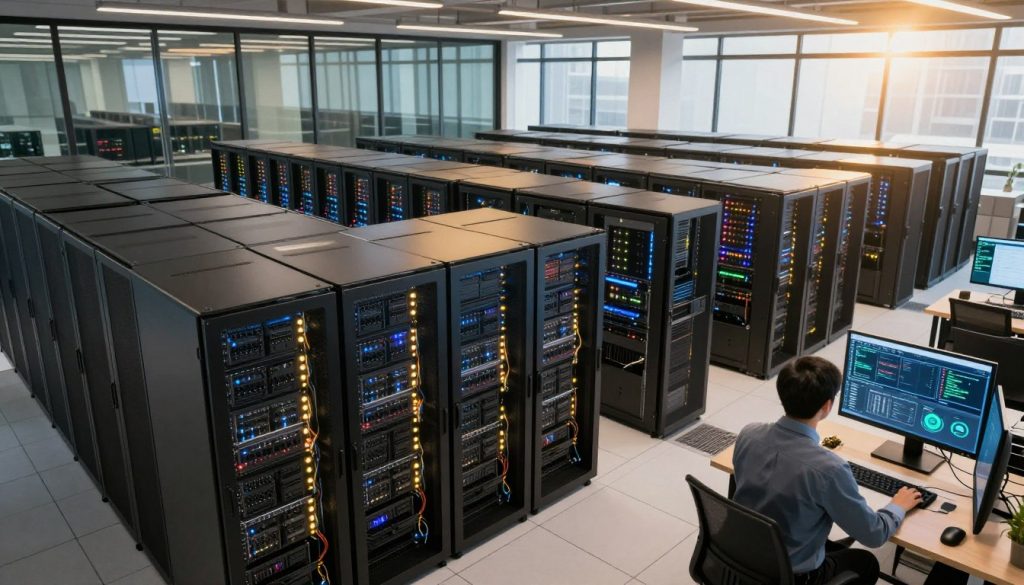
Finding the right rendering solution is all about balancing your budget and power needs. You have two main choices: using local hardware or a render farm. This decision affects your cluster performance and how efficient your creative work will be.
Evaluating Cloud-Based GPU Cluster Providers
Cloud-based options should be scalable. A good provider lets you quickly add hundreds of nodes. This is key for meeting deadlines.
Look for clear pricing and support for your software. Also, check the service level agreements to keep your data safe. Top providers have dedicated teams to help you get the most from your infrastructure.
Hardware Specifications to Look For
The quality of your render farm depends on its hardware. You need enough VRAM to handle complex scenes. Also, high memory bandwidth is crucial for fast data transfer.
Compare hardware by looking at CUDA core counts or similar units. These ensure your infrastructure can handle demanding tasks. Use the table below to see how local setups compare to cloud-based options.
| Feature | Local Workstation | Cloud Render Farm |
|---|---|---|
| Initial Cost | High Capital Investment | Pay-as-you-go |
| Scalability | Limited by Hardware | Virtually Unlimited |
| Maintenance | Manual Updates | Managed by Provider |
| Performance | Fixed Capacity | Dynamic Scaling |
Setting Up Your Connection to the GPU Cluster
Starting your journey with a GPU cluster setup is key. You need a solid link between your computer and the remote hardware. This step is crucial for managing your rendering tasks.
By focusing on security and easy access, you keep your work safe. You also have full control over the power of the machines.
Configuring Secure SSH Access
Secure Shell (SSH) is the main way to talk to your remote machines. Always use public-key authentication instead of passwords. This makes your GPU cluster much safer.
First, make your key pair on your computer. Then, put the public key on your remote nodes. After that, you can turn off password logins. This makes your setup stronger against hackers and keeps your connection steady.
Establishing Remote Desktop Environments for Visual Control
While command lines are useful, sometimes you need to see what’s happening. A remote desktop lets you control your GPU cluster like you’re right there. NoMachine or TigerVNC are great for fast visual feedback.
These tools let you check on your renders and see how resources are being used. They help you switch between your local work and the remote nodes smoothly. Here’s a table to help you pick the best tool for your needs.
| Tool Name | Primary Use Case | Security Level | Latency Performance |
|---|---|---|---|
| SSH (CLI) | System Administration | Very High | Excellent |
| NoMachine | Visual Rendering Control | High | High |
| TigerVNC | Lightweight Monitoring | Medium | Moderate |
Uploading Assets and Synchronizing Data
Your success with a GPU cluster setup depends on quick asset syncing. Massive 3D scenes can slow down file transfers. Optimizing your data pipeline helps your hardware render faster.
Utilizing High-Speed Transfer Protocols
Standard file transfer methods fail with big textures and geometry files for distributed rendering. Use specialized protocols for fast data transfer. These ensure data reaches nodes quickly and without errors.
Here are some high-speed solutions for your workflow:
- Rsync: Great for updates, as it only transfers file changes.
- Aspera: Moves large datasets fast over long distances with FASP technology.
- Cloud-Native Sync: Use your provider’s tools for perfect local and remote directory mirroring.
Managing Version Control for Large Render Projects
Keeping project files organized is key. Without a system, you might render old versions or miss assets. A good version control strategy prevents these issues and keeps your team on track.
Here are ways to manage your project assets:
- Use Git LFS: Tracks heavy binary files without cluttering your repository.
- Centralized Asset Folders: Store all textures and caches in a standard directory to avoid file path errors.
- Naming Conventions: Follow a strict naming policy to ensure the right scene version is used by all nodes in your GPU cluster setup.
By focusing on your data pipeline, you create a reliable environment. This is crucial for professional distributed rendering workflows. When your data is in order, you can dive into the creative aspects of your project.
Configuring Render Settings for Maximum Efficiency
Getting the right balance between quality and speed is key for professionals. Adjusting your software settings can make your hardware work better. This leads to faster render speed and better render efficiency.
Adjusting Sampling Rates for AI-Accelerated Denoisers
Today’s rendering uses AI to clean up images. You don’t need to use many samples for a pristine image. Lower sampling rates and AI do the rest.
This method cuts down the time for each frame. Lowering your sample count and using AI for denoising makes your cluster work faster. It keeps your work looking great while speeding up your workflow.
Balancing Resolution and Render Time
Every project is different, and finding the right resolution is key. High-resolution images take longer to render. You should check if your final image needs to be at the highest resolution.
Adjusting your resolution settings can save time and resources. Strategic resolution management helps you meet deadlines without losing quality. Keeping your settings consistent is crucial for reliable rendering.
Executing the Render Process Across the Cluster
Starting a render on a network makes your creative work go fast. It gets past local limits, showing cluster rendering‘s power. It makes complex scenes easy to handle.
Distributing Frames via Command Line Interfaces
The command line interface (CLI) is key for your workflow. You can send frames to specific nodes with scripts. This keeps your render speed steady across the farm.
Batch scripts help automate task assignments. This cuts down on mistakes and uses all network nodes fully.
“Efficiency is doing things right; effectiveness is doing the right things.”
Monitoring Real-Time Progress and Resource Allocation
Keeping cluster performance high means watching your resources closely. You need to check CPU and GPU use to avoid bottlenecks.
Most pro setups have dashboards for real-time updates. Watching these, you can tweak your cluster rendering plan if needed.
Good resource management boosts your render speed. Balancing the load right means your project is done on time and looks great.
Troubleshooting Common Cluster Rendering Issues
When your render queue stalls, knowing how to diagnose the issue is key. Even the most robust GPU cluster can face unexpected problems during complex productions. Learning these fixes helps keep your project on track and avoids costly delays.
Resolving Missing Asset Errors
Missing assets are a common reason for failed frames in cluster rendering. This often occurs when render nodes can’t find textures, caches, or geometry files on shared storage. Always make sure your file paths are set to relative to avoid these issues.
If you get a “file not found” error, check your network permissions. Make sure all nodes have read access to the central repository. Standardizing your directory structure across all workstations helps prevent these errors.
Handling Network Latency and Connection Drops
Network instability can disrupt communication between your control interface and render nodes. If you see frequent connection drops, check your local switch and cabling for physical issues. High latency often comes from bandwidth congestion, so consider isolating render traffic on a dedicated VLAN.
Setting up fail-safes is crucial for high uptime. Use automated scripts to ping nodes and restart stalled tasks if a connection timeout happens. This proactive monitoring keeps your GPU cluster running smoothly, even in less-than-ideal network conditions.
| Issue Type | Primary Symptom | Recommended Fix |
|---|---|---|
| Asset Path | Black frames or errors | Use relative file paths |
| Network Lag | Slow data transfer | Use dedicated VLAN |
| Node Timeout | Stalled render queue | Restart service daemon |
Optimizing Post-Processing Workflows
Turning raw data into a final product needs a smart workflow. The hard work is in GPU rendering. But, how you manage files after that makes all the difference. Good management ensures your fast output looks great in the end.
Integrating AI Girl GPU Cluster Outputs into Compositing Software
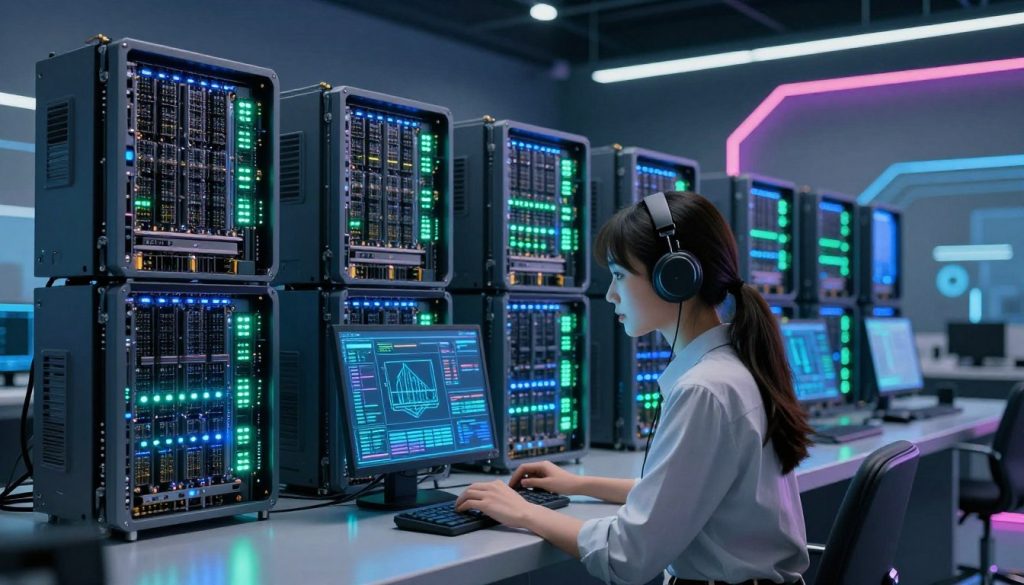
After getting your frames from ai girl GPU clusters, you need to put them into your compositing software. Tools like Adobe After Effects, Nuke, or DaVinci Resolve work well with high-bit-depth sequences. Make sure your color settings match the render’s output for the best look.
Having trouble importing? Check your cluster troubleshooting logs for any issues. Organizing your files before importing helps manage layers better. This is key for smooth work on complex projects.
Automating File Conversion and Export Pipelines
Manual file conversion takes a lot of time and can lead to mistakes. Using tools like FFmpeg can automate converting image sequences to video. This saves a lot of time, especially with large outputs from ai girl GPU clusters.
Creating simple scripts can automate exports right after download. This makes your GPU rendering results ready for client review without extra work. Here’s a table showing how different post-processing methods can speed up your workflow.
| Workflow Method | Automation Level | Speed | Complexity |
|---|---|---|---|
| Manual Import | None | Slow | Low |
| Scripted Conversion | High | Fast | Medium |
| Cloud-Based Pipeline | Full | Very Fast | High |
Scaling Your Workflow for Future Projects
As your creative projects grow, your technical setup needs to keep up. It’s not just about having more power. It’s about building a system that grows with your studio. Planning for the future today helps avoid common problems that growing teams face.
Automating Cluster Deployment with Infrastructure as Code
As your projects get bigger, manual setup becomes hard to keep up with. Infrastructure as Code (IaC) lets you define your render farm environment with files. This makes your setup consistent, easy to repeat, and scalable.
Tools like Terraform or Ansible can set up new nodes fast. Automating your setup cuts down on mistakes. It makes sure every machine works perfectly. This automated scalability is key for a modern, efficient studio.
Cost Management Strategies for High-Volume Rendering
Scaling up doesn’t have to break the bank. You can keep render efficiency by managing costs smartly. Using spot instances for less urgent tasks can save a lot of money.
Watching your resource use closely is also key. Running big tasks when it’s quiet saves money. Here’s a table to help you plan your budget:
| Strategy | Primary Benefit | Impact on Budget |
|---|---|---|
| Spot Instances | Lower Hourly Rate | High Savings |
| Auto-Scaling Groups | On-Demand Power | Optimized Spend |
| Resource Scheduling | Reduced Idle Time | Predictable Costs |
A good render farm balances performance and cost. Treating your infrastructure as a dynamic asset lets your team handle any project. This way, you keep quality and speed up.
Conclusion
Using GPU clusters changes how you tackle complex visual projects. You now know how to connect your creative ideas with technical skills.
This guide showed you how to get fast render speeds. By learning about cluster architecture and improving your digital assets, you get a big advantage in your work.
Apply these strategies to your next project to change your workflow. You’ll see faster results and can improve your art more quickly.
Begin building your custom cluster today to lead in the visual production world. You can scale your resources to tackle any project. Use these tools to make your work better and meet today’s industry standards.
FAQ
How does an ai girl GPU cluster significantly improve my project’s render speed?
An ai girl GPU cluster spreads out the work on many high-performance nodes at once. This way, engines like Redshift and Octane can quickly render complex frames. It cuts down the time needed to finish a project from hours to seconds.
Why should I choose an NVIDIA RTX 5090 cluster over a high-end local workstation?
A local workstation is limited by its size and heat. But, a 20-node NVIDIA RTX 5090 cluster boosts render speed and throughput a lot. It gives you thousands more CUDA and Tensor cores and more VRAM for big textures and geometry.
What are the most important hardware specifications to look for in a rendering infrastructure?
Look for VRAM, memory bandwidth, and interconnect speeds. More VRAM means you can handle complex scenes without losing texture quality. Fast memory bandwidth helps data move quickly, making your ai girl GPU nodes more efficient.
How do I ensure my project files are ready for a distributed rendering environment?
Optimize your scene geometry and make sure all texture paths are correct for the network. Also, check that all plugins are installed and licensed on every node to avoid errors and ensure consistent output.
Is it better to build local hardware or use a cloud-based provider like AWS or Google Cloud?
It depends on your goals. Building your own cluster saves money and gives you control over your data. But, cloud providers like AWS or Google Cloud offer quick scalability and no upfront costs or maintenance.
How can I securely manage my remote rendering fleet?
Use a secure SSH connection for command-line control and data encryption. For visual monitoring, set up a remote desktop via Teradici or VNC. This lets you troubleshoot or adjust settings in real-time.
What is the most efficient way to synchronize large assets across a cluster?
Use high-speed transfer protocols like Aspera or Signiant for fast asset movement. Version control systems like Perforce or Git LFS ensure all nodes have the latest assets, avoiding costly re-renders.
How do AI-accelerated denoisers impact my final output quality?
AI-accelerated denoisers, like NVIDIA OptiX, help achieve clean images with less computation. Adjusting settings to use these tools can keep quality high while speeding up rendering.
What tools can I use to monitor my cluster’s resource allocation in real-time?
Use software like Thinkbox Deadline or Royal Render to watch CPU, GPU, temperature, and memory usage. These tools help ensure no node is a bottleneck and your cluster runs efficiently.
How can I automate my post-processing workflow once the rendering is complete?
Integrate your cluster output into compositing software like Foundry Nuke or Adobe After Effects using watch folders. Script-automate file conversions and export with FFmpeg for seamless final deliverables.
What is “Infrastructure as Code” and how does it help with scaling?
Infrastructure as Code (IaC) uses tools like Terraform or Ansible to define your environment in files. This lets you easily add new nodes as your project grows, making your infrastructure scalable and repeatable.