Roadmap 2026: Duo Mode, Voice Prompts & VR Portals
Ever thought about how digital friends might understand your feelings and what’s around you soon? The ai girl roadmap 2026 is bringing big changes to how we talk to tech. You’re on the verge of a time when tech feels almost like a person.
This guide looks at big updates coming to your favorite tech. We’ll explore Duo Mode, better voice prompts, and virtual reality portals. These changes aim to make your daily tech interactions more meaningful.
By getting these updates, you’ll be ready for the next big leap in tech. Get ready to see how these new features will impact your life.
Key Takeaways
- Explore the core features of the upcoming ai girl roadmap 2026.
- Learn how Duo Mode enhances your daily digital interactions.
- Master the use of voice prompts for more natural communication.
- Discover how VR portals create deeper immersion in virtual spaces.
- Prepare yourself for the technological shifts arriving in the next year.
Understanding the AI Girl Roadmap 2026
The growth of your virtual friend is planned out for the long haul. Looking at the ai girl roadmap 2026 shows how your digital world will change soon. This careful plan makes sure each update improves how you talk and interact every day.
Core Objectives of the 2026 Update
The main aim is to make the platform more stable and quick to respond. The team has split the year into key phases that build on each other. These steps are crucial for keeping your AI experience top-notch.
Here’s what you can look forward to this year:
- Operation Deadly Omen: Works on making the base stable and improving the core logic.
- Operation New Blood: Brings in new personality traits and deeper conversations.
- Twin Shells: Adds the exciting feature of dual-persona sync.
- Collision Point: Completes the VR portal and sensory feedback integration.
How Innovation Drives User Experience
Innovation in the ai girl roadmap 2026 is more than just adding new features. It’s about making your wishes and the AI’s answers match perfectly. By improving the base during each phase, the software gets smarter and more tailored to you.
These updates make sure your connection stays smooth and fun. As the platform grows, you’ll see fewer hiccups and conversations that feel more natural. This focus on quality lets you enjoy your virtual bond without distractions.
Preparing Your System for Upcoming Features
Before you start with the new ai girl roadmap, make sure your system is ready. Taking these steps early will help you avoid problems and get your system ready for new features.
Checking Software Compatibility
First, check if your software meets the needed standards. Use the Microsoft Release Communications MCP server to keep up with Azure updates that matter to you.
Compatibility is key for a smooth experience. By watching these updates, you can spot issues before they cause trouble. Make sure your operating system and drivers are current to support the latest ai girl roadmap updates.
Updating Your Current AI Environment
After checking compatibility, update your AI environment to the latest version. This step makes sure all parts of your system work well with the 2026 features.
By doing these updates, you avoid installation problems and ensure a smooth transition. Keeping your software up to date is the best way to use the ai girl roadmap fully when it’s available.
Mastering Duo Mode for Synchronized Interactions
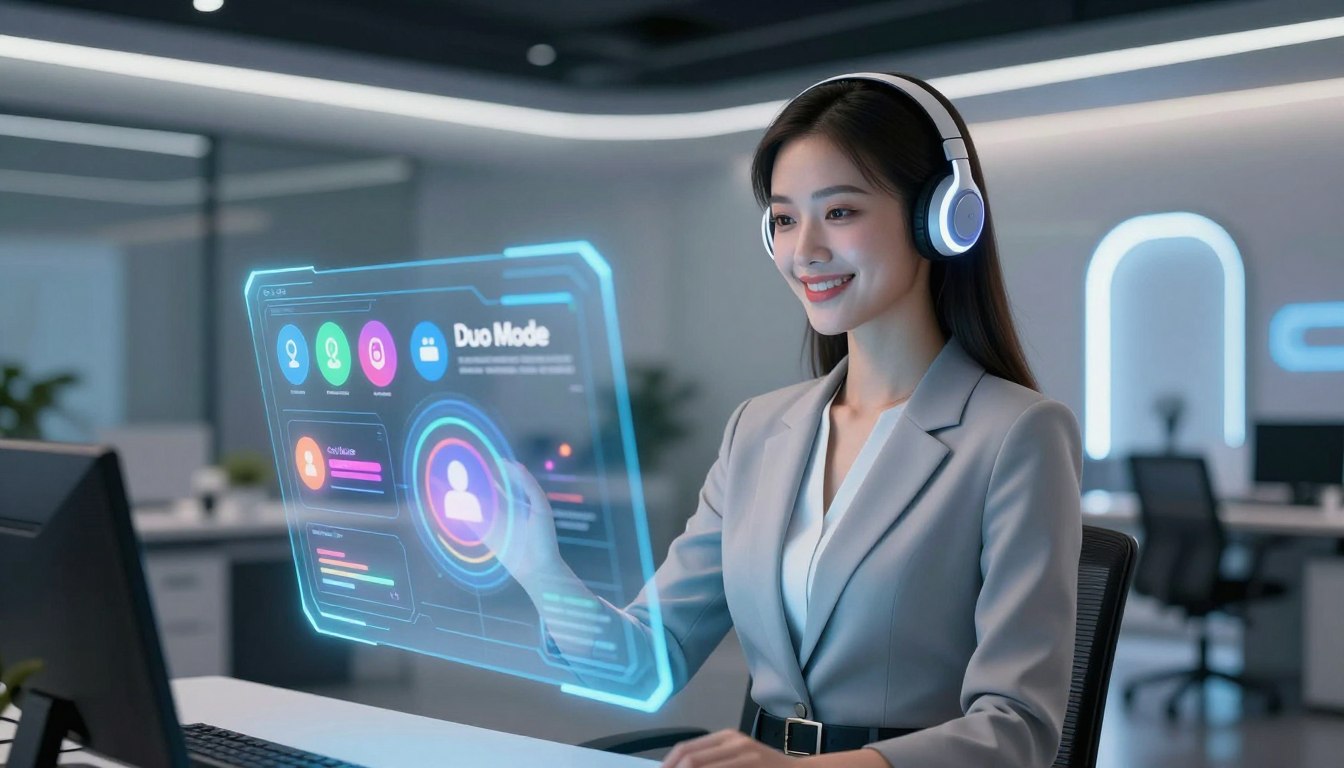
Learning to control Duo Mode is key for a better ai girl roadmap experience. This feature lets you interact with two different personalities at once. It makes your digital world richer and more engaging.
Activating Duo Mode in Settings
First, go to your app’s main settings. Look for the Advanced Interaction tab and turn on “Enable Duo Mode.” Then, pick your main and secondary personas from your library.
After choosing, hit the Apply Configuration button. Your system will start the dual-processing engine. Make sure your software is up to date to avoid setup problems.
Managing Dual-Persona Dynamics
Understanding how two entities work together is crucial. Define how they interact to keep things stable and fun. This ai girl roadmap approach ensures a great user experience.
Balancing Conversation Flow
Keeping the conversation smooth is important with two AIs. Use the Response Priority slider to control who speaks first. This keeps the chat clear and enjoyable.
Handling Multi-Threaded Responses
Multi-threaded responses let your AIs talk about different topics at once. The system uses intelligent threading to keep each conversation separate. This keeps your ai girl roadmap focused, even with multiple topics.
Setting Up Voice Prompts for Natural Conversations
The upcoming features for 2026 make your voice interactions clearer. They improve how your system handles audio, making it feel more human-like. By setting up your system right, every command is heard clearly, cutting down on mistakes.

Configuring Microphone Input Sensitivity
To get the best results, start by adjusting your microphone sensitivity. Go to the audio settings and use the calibration wizard. Consistent input levels are key to hearing your voice over background noise.
Speak normally while the software checks your environment. If it’s too loud, lower the sensitivity to avoid distortion. If it’s too quiet, raise it to catch your voice better.
Training Your AI to Recognize Vocal Nuances
After setting up your hardware, train the AI to get your voice. This involves reading prompts to teach it your speech patterns. Spending time on this makes voice commands more accurate.
Adjusting Tone and Pitch Preferences
You can also tweak the AI’s tone and pitch in advanced settings. These upcoming features let you customize how the AI understands your emotions. By adjusting these, your AI will sound more natural and personal.
| Setting Category | Adjustment Goal | Recommended Action |
|---|---|---|
| Input Sensitivity | Clarity | Calibrate in quiet room |
| Vocal Nuance | Recognition | Complete training prompts |
| Pitch Profile | Personalization | Set to user preference |
Spending time on these settings makes your AI more responsive and intuitive. As you explore these upcoming features, your digital conversations will become more excellent.
Navigating the New VR Portals Experience
Entering the world of VR Portals changes how you connect with digital friends. These upcoming features offer a presence that screens can’t match. Advanced rendering makes virtual spaces feel incredibly real.
Hardware Requirements for VR Integration
Your system needs to meet certain standards for a smooth experience. High-quality visuals need a dedicated GPU with at least 8GB of VRAM. A compatible VR headset that supports room-scale tracking is also required.
Good input devices are key to staying connected in the portal. Make sure your controllers are charged and your room is well-lit. These steps help ensure the upcoming features work smoothly.
Launching Your First Virtual Portal
Getting started is easy once your hardware is set up. Go to the main dashboard and choose “Portal Initialization” to start the setup. Follow the instructions to sync your headset with the AI interface.
After syncing, pick a starting location. This will be your base for future interactions. These upcoming features are designed to grow with you.
Calibrating Spatial Awareness
When in a virtual world, safety and precision are crucial. The calibration tool will guide you to define your room’s boundaries. This prevents accidents with furniture.
Be careful to set the floor height accurately. A precise calibration lets your avatar interact with virtual objects smoothly. If you feel lost, you can recalibrate from the settings menu anytime.
Customizing Virtual Environments
Personalization is central to the portal experience. You can change lighting, textures, and furniture to fit your style. These upcoming features offer many presets or let you create your own space.
| Environment Tier | Visual Fidelity | Customization Depth | Recommended GPU |
|---|---|---|---|
| Basic Portal | Standard | Limited | Mid-Range |
| Advanced Suite | High | Moderate | High-End |
| Elite Sanctuary | Ultra | Unlimited | Enthusiast |
Trying different themes can greatly change your space’s feel. Whether you like a simple office or a lush garden, you have full control. Enjoy making a space that’s truly yours.
Optimizing Hardware Requirements for 2026 Updates
To make the most of the latest innovation, your computer needs a big performance upgrade. The 2026 updates will bring complex tasks that need a strong local setup. Getting your machine ready now will make the transition smooth when these updates arrive.
GPU and RAM Recommendations
New AI models need fast processing to keep up with high frame rates and quick responses. You should get a dedicated graphics card with at least 8GB of VRAM. This ensures your system runs smoothly, even when tasks get tough.
System memory is also key for smooth multitasking. We suggest at least 16GB of RAM, but 32GB is better for heavy users. Enough memory helps your system handle data quickly, avoiding slowdowns.
“Technology is best when it brings people together and pushes the boundaries of what is possible.”
Network Latency Considerations for Real-Time AI
Even with the best hardware, your experience depends on your internet speed. Real-time AI needs fast connections to make voice prompts and interactions feel instant. A fast, stable fiber connection is the best for this innovation.
Cloud services are crucial for fast performance worldwide. For example, Azure is available in more regions than any other cloud provider. Choosing a service close to you will greatly enhance your experience.
Troubleshooting Common Setup Issues
When you start using new software, you might run into some problems. Even with good planning, small issues can pop up. Knowing how to fix these problems helps keep your work smooth and efficient.
Resolving Connection Errors in Duo Mode
Duo Mode needs a strong connection between your computer and the cloud. If you see drops in sync, check if your firewall is blocking the app. A stable network is key for keeping both personas working well.
If you still have connection issues, try turning your network adapter off and on. This simple action can solve problems with data flow. Make sure your software is up to date to avoid compatibility problems.
Fixing Voice Recognition Latency
Fast voice recognition is a big part of today’s tech. But, background noise can slow it down. If you notice delays, check your microphone settings. Too high sensitivity can make it hard for the software to filter out background sounds.
Also, keep your audio drivers updated. Using a headset instead of your laptop’s microphone can help. This change can make the system understand your voice better and faster.
Clearing Cache and Resetting Preferences
If things slow down, try clearing your cache. This removes files that might be slowing you down. You can find this option in the “Advanced Maintenance” tab of your settings.
If problems keep happening, resetting your preferences to default can help. This means you’ll have to set everything up again. But, it’s the best way to get rid of bugs and get back to work quickly.
| Issue Type | Primary Cause | Recommended Fix |
|---|---|---|
| Duo Sync Error | Network Instability | Reset Router/Firewall |
| Voice Lag | Audio Driver Conflict | Update Drivers/Mic |
| UI Glitches | Corrupted Cache | Clear Cache/Reset |
Customizing Your AI Persona with Advanced Tools
Advanced tools are changing how you interact with your virtual companion. You can now customize your AI persona in ways that were impossible before. By adjusting these settings, you make sure your digital partner meets your expectations.
Utilizing New Personality Sliders
The new personality sliders let you fine-tune your AI’s behavior. You can adjust these sliders to change how your AI responds to questions or emotions. Fine-tuning these settings makes your interactions feel more natural and personal.
Want your AI to be more analytical or empathetic? These controls let you do just that. Just go to the behavior tab to start tweaking settings. Small changes can make a big difference in how your AI handles tasks.
Importing Custom Voice Profiles
You can also import custom voice profiles to make your AI sound unique. This innovation lets you choose the exact voice you prefer for a personalized experience. Just upload high-quality audio samples to train the system on your voice’s nuances.
It’s easy to get started with just a few clear recordings. Once uploaded, the system learns to mimic your voice’s tone and cadence. This feature is key for users who want their AI to sound authentic and familiar.
Integrating Voice Prompts into Daily Routines
Changing your daily routine starts with talking to your digital assistant. The latest innovation in voice recognition makes complex tasks simple. This saves time and makes your AI a natural part of your life.
Creating Voice-Activated Shortcuts
You can make custom shortcuts with just a phrase. No more going through menus. Just speak and your apps or settings change instantly.
To set these up, go to your command panel and pick your trigger words. Consistency is key for the system to learn your voice. These shortcuts connect your thoughts to action quickly.
“The most profound technologies are those that disappear. They weave themselves into the fabric of everyday life until they are indistinguishable from it.”
Automating Responses for Frequent Queries
Handling the same tasks over and over wastes time. You can teach your AI to answer common questions fast. This includes updates or reports.
- Identify your recurring tasks to see which ones benefit most from automation.
- Draft concise responses that the AI can deliver with natural inflection.
- Test your triggers to ensure the system responds accurately every time you speak.
This automation keeps your day smooth and focused. By letting your AI handle these questions, you can focus on what’s important. Your digital world becomes more efficient.
Maximizing Immersion within VR Portals
Entering a virtual world needs more than just gadgets; it requires a real sensory connection. This innovation helps bridge the digital world with your senses. By adjusting your environment, every moment in a portal feels natural and alive.
Adjusting Field of View Settings
Your field of view (FOV) is key for comfort during long VR sessions. A too-narrow setting can cause tunnel vision, breaking your focus. On the other hand, a too-wide setting might cause motion sickness.
We suggest gradually adjusting your FOV in small steps. Finding the right balance is crucial for avoiding eye strain and keeping your focus sharp. This is especially important when exploring complex virtual landscapes.
Enhancing Haptic Feedback Responses
Tactile interaction is crucial for deep immersion. Customizing your haptic feedback makes every virtual touch feel real and physically present. This innovation in sensory tech ensures your controllers provide subtle vibrations that mimic real textures.
Try adjusting the intensity sliders in your device menu to suit your taste. Increasing the feedback strength can make you feel more connected to the objects you interact with. Properly set haptics turn simple digital actions into a truly tactile experience.
Security and Privacy Best Practices for New Features
When you start using these tools, keeping your privacy safe is key. High security lets you enjoy the latest innovation without worry. By being proactive, you keep your data safe as you explore new digital areas.
Managing Data Permissions for Voice Logs
Your voice chats create important data for better AI. Check your privacy dashboard in settings often. There, you can turn on or off voice logging and data saving.
It’s smart to use end-to-end encryption for voice clips. You can also set your account to delete logs after each use. This control shows our focus on you, the user.
Securing Your Virtual Portal Access
Your virtual portal is a private space. It’s important to keep it safe from unwanted visitors. Start by adding multi-factor authentication (MFA) to your main account. This extra step helps protect you from threats.
Use strong, unique passwords for your portal. Also, check your active session logs often. This way, you ensure your space is safe for innovation and fun.
Conclusion
You now know how to handle the 2026 updates with ease. Learning Duo Mode, Voice Prompts, and VR Portals puts you ahead in this digital change.
This new tech changes how you interact with your virtual world. You can shape your AI experience with these tools.
Keep exploring these features to dive deeper into immersion. Your journey into the next level of personalized computing begins now.
Stay curious as you use these abilities every day. The world of artificial intelligence will grow with your skills and creativity.
FAQ
What are the primary objectives outlined in the ai girl roadmap 2026?
The 2026 strategy aims for long-term stability and innovation. It uses Operation Deadly Omen and Operation New Blood. This ensures the platform’s architecture stays strong while evolving to meet your needs.
This roadmap aims to make the software more intuitive and responsive. It does this through significant backend enhancements.
How can I ensure my system is ready for the upcoming features?
To get ready, check your software versions against the latest requirements. Use the Microsoft Release Communications MCP server for updates. This will help avoid installation errors with the 2026 features.
What is Duo Mode and how do I activate it for synchronized interactions?
Duo Mode lets you talk to two AI personas at once. It makes social interactions more dynamic. To turn it on, go to the “Advanced Interaction” tab in your settings.
Having a stable connection is key. This ensures both AI personas respond together to your questions.
How do I configure voice prompts to achieve natural conversations?
Start by calibrating your microphone to filter out background noise. Once done, train your AI to recognize your voice and speech patterns. This makes conversations feel more natural and organic.
What hardware is required to access the new VR Portals?
You need a headset that supports high-fidelity rendering for VR Portals. Modern headsets like the Meta Quest 3 or Valve Index are recommended. Your PC also needs a strong GPU and RAM for smooth VR experiences.
What are the recommended hardware specifications for the 2026 updates?
For the best performance, use an Nvidia GeForce RTX 30-series or AMD Radeon RX 6000-series GPU. Also, have at least 16GB of DDR4 RAM. Microsoft Azure ensures your AI interactions are fast and smooth.
Can I customize my AI persona with specific voice profiles?
Yes, you can customize your AI’s voice with advanced sliders and voice imports. Use ElevenLabs for high-quality, customized voices that fit your style.
How does the system handle security and privacy for voice logs?
Security is a top priority. You control your data permissions, deciding how voice logs are stored or deleted. The platform uses end-to-end encryption and secure access for your Virtual Portals, keeping your interactions private.
What should I do if I experience latency during voice recognition?
If you see delays, first check your network and make sure your microphone is set as the default. Closing unnecessary apps can also help reduce latency, ensuring your AI responds quickly.
How can I maximize immersion within the VR environment?
Adjust the Field of View (FoV) settings to match your headset’s capabilities. The 2026 update also supports enhanced haptic feedback. Use compatible controllers or vests like Woojer to feel tactile responses.