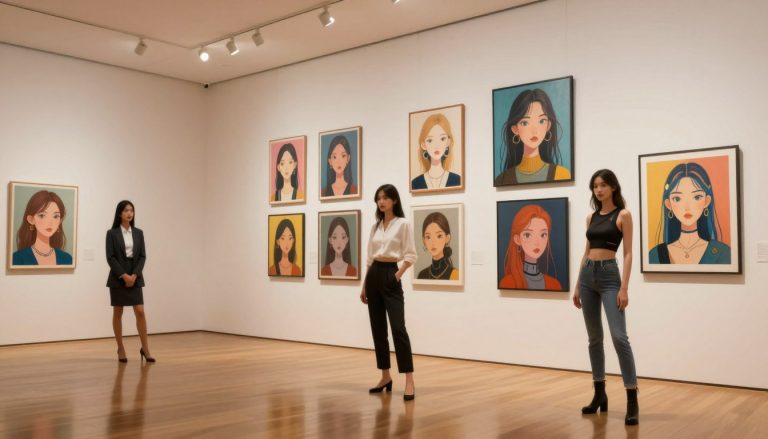
Tracking Progress: Journaling Seeds, Styles & Lessons
Ever wondered why your digital creations don’t always hit the mark? Mastering your creative workflow is more than just finding inspiration. It’s about documenting every step of your process. This turns scattered ideas into a clear path for growth.
Your digital workspace is like a garden. Keeping a log helps a gardener get a great harvest. You can do the same to improve your unique style. Organizing your prompts and styles lets you repeat what works and learn from mistakes. This way, you grow consistently in your art.
When you care for your digital work like a gardener does for plants, you get amazing results. ai girl progress tracking shows how you’ve grown over time. Start journaling today to see how small changes lead to big breakthroughs.
Key Takeaways
- Maintain a detailed journal to document your creative workflow and artistic evolution.
- Treat your digital projects like a garden to ensure consistent growth and better results.
- Organize your prompts and styles to create a reliable reference for future work.
- Use systematic documentation to identify what works and refine your unique aesthetic.
- Consistent record-keeping is the secret to achieving professional-level digital character design.
Establishing Your AI Girl Progress Tracking System
Think of your documentation process as a garden journal. It guides you from the start to the end. Just like a gardener tracks soil and sunlight, you need a consistent way to track ai girl progress tracking. This ensures your creative projects grow over time.
Creating a strong system is key to turning random tries into a polished portfolio. By using a dedicated journal, you have a practical guide. It helps you avoid mistakes and build on what works.
Choosing Your Journaling Medium
Choosing between digital or physical depends on what you like. Digital tools are great for searching and adding images easily. But, some find physical notebooks better for brainstorming.
“The palest ink is better than the best memory.”
Think about these points when picking your tool:
- Accessibility: Is it easy to update during late nights?
- Searchability: Can you find old prompts or settings easily?
- Visual Integration: Can you save images side by side?
Defining Your Creative Goals
Clear goals are your compass for ai girl progress tracking. Without them, it’s hard to see if you’re getting closer to your dream look.
Begin by writing down specific goals in your journal. Like mastering a style or getting consistent facial features in different lights. These goals give you a framework to measure your progress and keep your creativity flowing.
Documenting the Initial Seed Prompts
Starting a solid ai girl tracking system means keeping good records of your first inputs. Just like a gardener notes how plants grow, you must care for your prompt seeds. They are the key to your creative growth.
The Anatomy of a Successful Seed
A great generation starts with a clear prompt that captures your vision. Break down your prompts to see which parts lead to consistent images.
A good seed has critical components that come together to create the final image. Organize your prompts with these key elements:
- Subject Description: Clear details about the character’s look and clothes.
- Stylistic Modifiers: Art styles, rendering engines, or lighting methods.
- Technical Parameters: Aspect ratios, sampling steps, and guidance scales.
- Environmental Context: Background details that place the character in a setting.
Organizing Your Prompt Library
Knowing your prompts’ structure is just the start. You need a place to keep them all. A good library helps you find and use your best prompts easily.
Use a spreadsheet or a database tool to manage your prompts. Make sure your system lets you search and filter by traits or styles.
“The secret to consistent creative output lies in the ability to replicate the conditions that produced your best work.”
With a searchable database, you turn random tries into a repeatable process. This keeps your artistic vision growing with precision over time.
Mastering Style Consistency Through Iteration
To keep your AI generations looking the same, you need a strict plan for iteration and keeping records. You must find the key visual features that make your character unique. Keeping a detailed record of these helps them stay consistent, even when you try new things.
Identifying Core Stylistic Elements
To create a distinct look, break down your character into foundational components. Look for traits like color schemes, lighting, and line weights. These elements are the foundation of your work.
After spotting these traits, start a journal to track them. This helps you see which settings work best. You’ll find that small changes in your prompts can greatly improve your designs.
Tracking Variations in Character Design
Good iteration means trying small changes while keeping most things the same. When you tweak something, like a face feature or texture, write it down right away. This method keeps you from forgetting what works well.
The table below shows how different changes affect your character’s look:
| Variable Type | Impact Level | Consistency Strategy |
|---|---|---|
| Color Palette | High | Use hex codes or specific color descriptors |
| Lighting Style | Medium | Define light source and intensity |
| Facial Features | High | Maintain fixed descriptive keywords |
| Background | Low | Use negative prompts to isolate subject |
Developing a Systematic Logging Workflow
Logging your work in a systematic way makes sure you can repeat your successes. When you do ai girl tracking, you’re running digital experiments. Without a clear log of your steps, even the most impressive results can’t be duplicated later.
Think of your logs as markers for your creative garden. Just as plant markers help a gardener remember what’s planted and where, your logs guide your digital creations. Consistency is the key to improving your artistic vision over time.

Recording Model Settings and Parameters
To get professional results, you need to record every detail of your generation process. This includes the model version, sampling method, and number of steps. Keeping these details organized helps you figure out what works and what doesn’t.
“The difference between a lucky guess and a mastered craft lies in the precision of your documentation.”
Keep a structured spreadsheet or a dedicated notebook for your ai girl tracking work. Logging these parameters creates a reliable history that helps you avoid past mistakes. Precision is your greatest asset when working with generative models.
Capturing Negative Prompts and Weights
The details of your output depend on negative prompts and specific token weights. These elements are like fine-tuning knobs for your final image. If you don’t record these, you can’t effectively improve your designs.
Track the following data points to enhance your ai girl tracking workflow:
- Negative Prompt Strings: Keep a list of terms that consistently clean up your images.
- Token Weights: Note how specific emphasis changes the facial features or clothing details.
- CFG Scale Adjustments: Record how this value impacts the adherence to your original prompt.
By documenting these specific inputs, you gain full control over your creative output. This level of detail turns your workflow from random attempts into a deliberate, artistic process.
Analyzing Visual Feedback Loops
Transform your creative process by seeing how small changes affect your images. Visual feedback loops help you understand how minor tweaks in prompts change your work’s quality. This data-driven approach makes your daily practice a system for constant improvement.
Comparing Side-by-Side Generations
Comparing two images side-by-side shows how your iteration process affects character consistency. This method lets you see which words in your prompt cause positive or negative changes. Consistency is the goal, and visual comparison is the best way to achieve it.
Keeping a log of these tests builds a library of what works for your style. You’ll see that small changes in prompts can make big differences in the final image. This detail keeps your creative vision sharp and focused.
Identifying Patterns in AI Hallucinations
Every artist faces unwanted artifacts or strange distortions in AI images. Learning to spot these patterns is crucial. Once you find a recurring error, you can tweak your prompts to avoid it in the next iteration cycle.
Proactive prompt management helps you steer clear of common errors. By documenting these mistakes, you create a guide for future sessions. This approach turns your workflow into a professional, highly efficient creative practice.
Refining Character Traits Over Time
Improving your character traits is a journey of small steps. These steps lead to lasting visual consistency. It’s a mix of technical skill and creative patience.
By tracking every small change, you create a roadmap for future growth. This roadmap helps you develop your character further.
“Persistence is the twin sister of excellence. One is a matter of quality; the other, a matter of time.”
Maintaining Continuity Across Different Models
Keeping your character’s identity consistent across models is a challenge. Each model has its own artistic bias, affecting your character’s look. You need a master reference to keep key traits the same.
When switching models, test your prompt on the new one. Compare the results with your previous work. If it looks off, find out which words are causing the difference.
Adjusting Facial Features and Expressions
Refining facial features means tweaking your prompt’s weights. If your character’s face looks off after a model change, adjust your prompt. Small tweaks can make a big difference.
Keep a detailed log of what works for each model. For example, one model might need more emphasis on “sharp cheekbones.” Documenting these details helps you avoid trial and error next time. It turns your process into a structured system.
Extracting Lessons from Failed Generations
Every unexpected result from your AI model is a chance to get better. Don’t see these as failures. Instead, they are essential data points that show what your prompts can’t do yet. By keeping track of these moments, you lay the groundwork for future improvements.
Diagnosing Prompt Conflicts
Prompt conflicts happen when your instructions don’t agree with each other. You might ask for a certain art style but also a lighting setup that doesn’t fit. Careful analysis of these issues helps pinpoint where the AI went wrong.
Begin by checking your prompt structure for any conflicting keywords. If the AI often ignores a key trait, it might be because of too many other details. By focusing on these variables, you can tweak your prompts for better results.
Turning Errors into Creative Breakthroughs
At times, an error leads to a style you didn’t plan but find intriguing. These creative breakthroughs occur when the AI sees your prompt in a new way. Instead of throwing these away, keep them as ideas for future projects.
Seeing errors as learning opportunities helps you grow. By embracing mistakes, you let go of the need for perfection and open up to new ideas. Use the table below to identify common issues and find solutions.
| Error Type | Likely Cause | Recommended Action |
|---|---|---|
| Character Distortion | Conflicting style weights | Reduce weight of style tags |
| Prompt Ignoring | Keyword dilution | Move key terms to the front |
| Lighting Mismatch | Negative prompt interference | Audit your negative prompt list |
| Unexpected Composition | Ambiguous framing instructions | Add specific camera angle keywords |
Managing Version Control for Your AI Assets
Managing your AI assets well keeps your work organized, especially during busy creative times. With iteration happening often, your folders can fill up fast. A clear plan helps you pick the best version of your work.
Naming Conventions for Iterative Files
Having a set naming system is crucial for a smooth workflow. Use a format like “YYYYMMDD_ModelName_Feature_V01” for your files. This way, you can easily sort and track your work.
This approach helps you keep your files in order. It saves you from digging through messy folders. Consistency is key to seeing your creative journey clearly.

Archiving Successful Style Seeds
It’s not just about organizing files; you also need to save your best work. Keeping successful style seeds helps you build on them for new projects. These seeds are reliable starting points that save time.
Think of your archive as a showcase of your growth. Save the details of a standout iteration in a special folder. This keeps your workflow professional and efficient.
Integrating External References and Inspiration
Your AI-generated characters come alive with real-world artistic inspiration. Your technical logs show how you did it, but references give the “why” behind your choices. By exploring beyond the screen, you add depth and purpose to your digital creations.
Often, the best ideas come from traditional art, photography, or fashion. Many creators find organizing these resources easier with a link in bio. This link acts as a central hub for all their inspiration.
Mapping Artistic Influences to AI Outputs
To link traditional art with digital creation, you must map influences to prompts. This means breaking down an image into its key elements, like lighting and color.
When you find an artist or movement that fits your vision, translate those elements into keywords. Here are steps to improve your mapping:
- Deconstruct the reference: Find the main color temperature and contrast.
- Translate to prompts: Use terms like “chiaroscuro lighting” to achieve the desired look.
- Iterate and compare: Make different versions to see if the AI gets your inspiration right.
Using Mood Boards Alongside Your Journal
Mood boards and journals together give you a visual context. Your journal tracks the technical details, while the mood board guides your aesthetic. This combo keeps you focused on your vision.
This method ensures your original intent stays clear through the creative process. Here’s how to blend your inspiration with technical notes:
“Creativity is intelligence having fun, and your mood board is the playground where your technical skills meet your artistic intuition.”
Having your mood board nearby helps you stay on track. This systematic integration lets you adjust quickly if your AI creations stray. It keeps every iteration true to your artistic vision.
Evaluating Long-Term Creative Growth
Looking at your long-term progress means seeing beyond single tasks. Keeping a detailed journal lets you track your growth over time. It shows how your skills have improved and what habits make your work stand out.
Reviewing Monthly Progress Milestones
Setting milestones helps you take your artistic journey one step at a time. At month’s end, review your journal to see if you hit your targets. Consistency is key to getting better, and seeing your progress can motivate you to keep going.
Compare your latest work to what you did before. This helps you see if you’re meeting your long-term goals. If you hit a wall, use these milestones to try new things and improve.
Adjusting Your Workflow Based on Data
Using data to guide your decisions is crucial for mastering AI character generation. By analyzing your journal, you can find the most effective workflows. This lets you cut out what’s not working and focus on what does.
Use what you learn to improve your prompts and settings for future projects. Making informed adjustments boosts both the quality and speed of your work. This turns your creative process into a powerful tool for making art.
Advanced Techniques for Deep Tracking
To take your work to the next level, you need to use automated systems and analyze visual data. Moving away from manual entry saves you time. This lets you focus more on the creative side of your work. A strong ai girl tracking plan ensures you keep track of every detail for future use.
Automating Data Entry for AI Generations
Manual logging can leave gaps in your data, slowing your growth. Tools like webhooks or custom scripts can automatically capture metadata from your generation interface. This seamless integration saves you time by storing parameters, seeds, and model versions in one place.
Consider using platforms like Notion or Airtable with automation services to organize your logs. This makes your ai girl tracking both efficient and reliable. Once set up, you can refine your prompts while the technical work is done for you.
Visualizing Your Artistic Evolution
Seeing your progress visually offers a unique view of your journey. Creating galleries to show your work over time helps spot style and quality changes. Visual data uncovers trends that might be missed in text logs.
Charts can also show how different parameters affect your work over time. This level of ai girl tracking turns data into useful insights. It helps you make better decisions for your future projects. Using these advanced techniques will make your artistic journey more rewarding.
Conclusion
Keeping a consistent record is key to success in digital art. By using ai girl progress tracking, you make sure each try helps you grow. This way, every experiment adds to your skills as an artist.
Your journal evolves with your skills and the tools you use. Tools like Midjourney or Stable Diffusion open up many possibilities. But your notes help you use these tools well.
Looking back at your past work gives you clarity. This habit turns random tries into a clear path to mastering art.
Begin your ai girl progress tracking today. It will help you make your creative ideas better and more consistent. Your future projects will be improved by the insights you gather now.
FAQ
How do I choose the best medium for my ai girl tracking journal?
Choose a platform that fits your workflow and needs. Digital tools like Notion, Obsidian, or Evernote are great for a searchable library. They also help with quick visual feedback.
If you prefer tactile planning, a physical notebook is a good choice. It’s perfect for brainstorming and setting creative goals before the technical work.
Why is it essential to document negative prompts and weights during the iteration process?
It’s important to log negative prompts and weights because they guide the AI. Small changes in these numbers can greatly affect the outcome. This ensures your style stays consistent and you can recreate successful traits.
How can naming conventions improve my version control for AI assets?
Using a systematic naming convention keeps your assets organized. Include the seed number, model used, and version tag. This makes it easier to find and reference previous work.
What should I do when I encounter prompt conflicts or AI hallucinations?
Don’t delete these results. Instead, treat them as valuable data. Analyze the prompt to understand what’s causing the issue. This can lead to new ideas and improvements in your work.
How do mood boards from platforms like Pinterest enhance my ai girl tracking efforts?
Mood boards give you a visual guide for your creative vision. They help you see how your AI outputs match your expectations. Using these boards in your journal keeps your work consistent and tracks your progress.
Is there a way to automate the logging workflow for my ai girl tracking?
Yes, you can use Python scripts or extensions like Automatic1111. They can export metadata from your images to Google Sheets or Airtable. This automation lets you focus on creativity while keeping a detailed record of your progress.