
Adding Narrative & Voice Prompts for Immersion
Ever thought about making your digital projects talk to your audience? Most online stuff feels dull because it lacks a personal touch. By adding an ai girl voice narrative, you can make static pages come alive.
This method changes how people interact with your content. It goes beyond text to offer a rich storytelling experience that grabs attention right away. You can easily connect digital data with real feelings.
Tools like ThingLink let you add 3D model annotations to your work. This guide will show you how to make your projects look professional. You’ll learn to create environments that feel real from the first click.
Key Takeaways
- Transform static digital content into dynamic, engaging experiences.
- Use audio cues to build a stronger connection with your audience.
- Leverage 3D model annotations to enhance user interaction.
- Create professional environments that feel grounded in reality.
- Master the art of digital immersion through strategic sound design.
Defining the Role of AI Girl Voice Narrative in Storytelling
An ai girl voice narrative can make a static interface come alive. It goes beyond text, inviting your audience to connect on a deeper level. This change makes your story feel more immersive.
The Psychology of Immersion Through Audio
Humans naturally respond to voices. A consistent voice makes information feel more relatable and trustworthy. This is why audio stories often stick with us more than text.
When we hear a clear voice, our brain treats it like a conversation. This makes the digital space feel more like a dynamic conversation.
Why Voice Cues Matter for User Engagement
Voice cues guide us through stories. Tools like ThingLink make it easy to add high-quality audio. This keeps your message clear and engaging.
Here are some benefits of using a ai girl voice narrative:
- Increased Retention: A friendly voice helps us remember more.
- Emotional Connection: A unique voice builds a strong bond with the character.
- Accessibility: Audio is great for those who don’t like reading long texts.
- Pacing Control: You control the speed, ensuring key details are absorbed at the right time.
By focusing on these aspects, your project will keep users engaged. A well-designed audio experience makes your story unforgettable.
Selecting the Right AI Voice Synthesis Tools
Creating a top-notch ai girl voice narrative means picking tools that focus on clear and emotional voices. The tech you pick connects your script to how users see your character. Choosing tools with advanced synthesis keeps your project professional and immersive.
Evaluating ElevenLabs for Emotional Range
ElevenLabs is a top pick for creators wanting nuanced vocal performances. It’s great at catching small changes in tone, key for a believable ai girl voice narrative. You can tweak settings for stability and clarity to keep the voice consistent.
This tool is also top-notch at showing complex emotions like excitement or doubt. This makes your virtual character seem more real and less robotic. For building a strong bond with users, its emotional range is a big plus.
Using Play.ht for Natural Conversational Flow
Play.ht shines for long conversations, offering a natural conversational flow. It’s made for speech that feels smooth and natural. This is perfect for interactive scenes where characters talk a lot without losing the listener.
The interface makes it easy to add pauses and emphasis. This helps pace the story well. With these features, you can make the dialogue feel like a real chat. This polish is key to keeping users hooked in your virtual world.
Comparing OpenAI TTS for Real-Time Interaction
For real-time interaction, OpenAI TTS is the go-to for speed and quick responses. It’s super fast at turning text into audio with little delay. This is great for scenes where characters must react fast to user choices.
Even with its focus on speed, the voice quality is still high for a compelling ai girl voice narrative. The voice stays consistent, helping users stay in the story. Picking this tool means your interactive parts will be smooth and quick.
Writing Effective Scripts for AI Voice Prompts
Writing for AI means focusing on how we speak, not just how we write. A good ai girl narrative breaks away from usual writing styles. This makes the text come alive for your audience.

Structuring Dialogue for Natural Speech Patterns
For a natural feel, use short, sharp sentences. Include contractions like “don’t” or “it’s” to sound more like real talk. This makes your storytelling feel friendly and not robotic.
Stay away from complicated sentences that might confuse the AI. Instead, aim for rhythmic phrasing that lets the AI speak naturally. If a sentence is too long, split it into two parts.
Incorporating Emotional Markers and Pacing
Adding emotional depth to an ai girl narrative is all about the little things. Use Speech Synthesis Markup Language (SSML) for pauses or emphasis. These help the AI show excitement, hesitation, or curiosity.
Consider your character’s emotions at every step. Adjust the pace to show they’re thinking or reacting. Strategic silence is as powerful as words in creating a believable character.
Balancing Narrative Exposition with Interactive Cues
Good storytelling mixes info with action prompts. In digital escape rooms, keep your story brief. This keeps the player focused on the task at hand.
Use interactive cues that encourage exploration. Make suggestions sound natural, not like orders. This collaborative approach keeps the user engaged and makes the experience feel like a real chat.
Step One: Preparing Your Narrative Assets
Creating an immersive experience starts with preparing your narrative assets. Before you begin, you need a solid foundation. This ensures your ai girl narrative connects with your audience. Organizing your creative materials early helps your project stay on track.
Drafting the Character Persona and Backstory
A compelling character needs more than just a voice. She must have a history and a unique personality. Define her motivations, quirks, and tone to make her feel real.
Think about how her background affects her reactions. Knowing her well helps keep the story consistent. This prevents the character from feeling out of place.
Mapping Out Key Narrative Beats
After defining your character, plan the story’s key moments. These moments guide the user through the experience. Use tools like the ThingLink 360 Image Library for visual support.
Strategic planning ensures audio and visuals align. Identifying key moments creates a natural flow. This keeps the user engaged and the story on track.
Formatting Scripts for Text-to-Speech Compatibility
Technical preparation is crucial. Format your scripts for the AI’s interpretation. Use simple sentences for a natural flow.
Include markers for pauses and emotional shifts. This detail makes your ai girl narrative sound polished. Proper formatting brings your vision to life.
Step Two: Integrating Voice Prompts into Your Project
You’re ready to make your creative work come to life. This step is about adding a real-time interaction to your ai girl narrative. It makes your project feel alive and interactive.
Setting Up API Connections for Dynamic Responses
To make your project interactive, you need to connect it to a text-to-speech service. Use RESTful APIs to send text and get high-quality audio back. This way, your ai girl narrative can change in real time.
This method keeps your character’s voice consistent. It’s key for a smooth experience in different scenarios.
Implementing Trigger-Based Audio Playback
After connecting, set up triggers for audio responses. These can be from user actions or story milestones.
When a user interacts, the system plays the right audio. Event-driven programming makes it feel natural and in sync with the visuals.
Managing Latency for Seamless User Experiences
Latency can ruin the illusion of a conversation. Make sure audio starts playing quickly after a trigger.
Use pre-fetching to load dialogue early. Also, keep your system secure and fast, like ISO 27001 standards. This ensures a smooth experience for all users.
Step Three: Refining Audio Quality and Character Consistency
To get a professional sound, focus on the technical details of your audio. The quality of your audio affects how users see your digital characters. Consistent voice cues are key to a cohesive story from start to end.
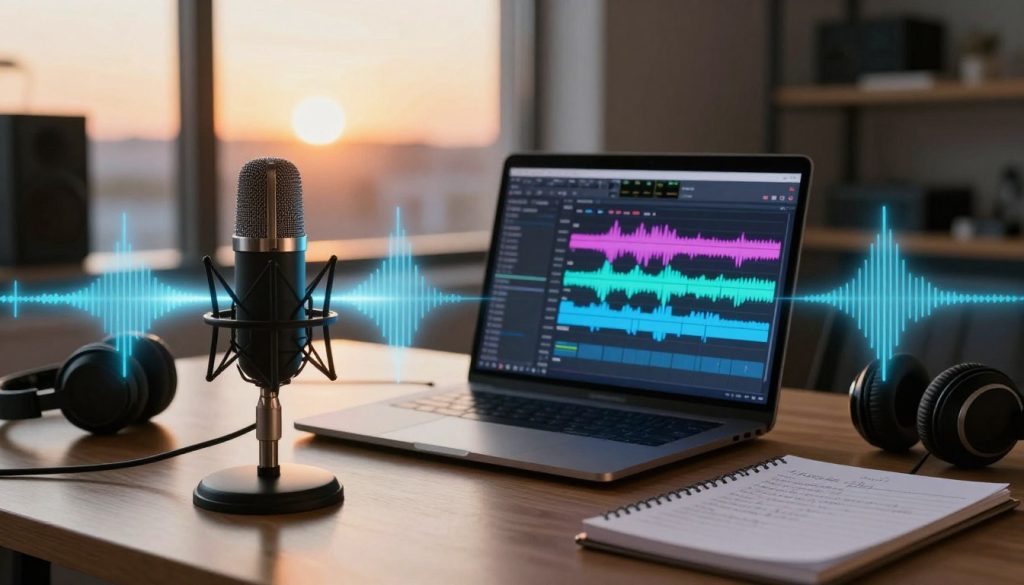
Adjusting Pitch and Stability Settings
To make your character sound real, tweak the synthesis parameters. Most AI tools let you change pitch and stability to fit your character.
- Stability: Lowering this setting adds more emotional variance. Higher settings keep the voice steady.
- Pitch: Changing the base frequency helps make characters unique or adjust for mood.
It takes time to find the right balance. Test these settings in short clips to keep the voice natural.
Maintaining Vocal Identity Across Different Scenes
Consistency is key when your project has many scenes. For example, in diverse settings like ThingLink’s immersive room at ISE Barcelona, your character should sound the same on all devices.
Use a fixed voice profile for all API calls. Don’t change the model during the project to avoid tone shifts. Keep your core settings the same to keep your voice cues consistent.
Post-Processing Techniques for Professional Sound
Even top AI audio can get better with some polish. Basic post-processing can remove unwanted sounds and improve clarity.
Here are key steps for a professional sound:
- Normalization: Make sure all audio has the same volume to avoid sudden changes.
- Equalization: Boost mid-range frequencies to make speech sound warmer and more human-like.
- Compression: Use a light compressor to make your voice cues clear against background sounds.
By refining your audio, you keep your project at a high quality. This focus on detail makes your story immersive for your audience.
Advanced Techniques for Dynamic Storytelling
To create a world that listens and responds, you need modern tools like ThingLink. These tools help you add voice cues for complex, non-linear stories. Now, developers of all levels can make high-end interactive designs.
Creating Branching Narratives with Voice Cues
To make a story that reacts, you must plan out many paths. Each choice should lead to new voice cues that change the story. This makes the experience feel new and personal.
- Define clear decision points where the story branches.
- Assign specific audio triggers to each potential outcome.
- Ensure smooth transitions between segments to maintain narrative momentum.
Adapting Tone Based on User Input
Advanced storytelling changes the AI’s emotional tone based on user input. Your system can adjust voice cues to match the mood. If a user seems hesitant, the AI might sound more reassuring and gentle.
This makes the bond between user and AI stronger. By changing pitch, speed, and inflection, the character feels real. Consistency in character identity is key, even as the tone changes.
Testing and Optimizing for User Immersion
Testing is the last step to turn a working prototype into a captivating story. You need to see how users react to your voice cues live. This step makes sure your tech matches the emotional story you want to tell.
Gathering Feedback on Voice Clarity
To make sure everyone hears every word, get feedback from different people. Talking to groups like the ThingLink XR Expert Program can help a lot. These experts often spot audio issues you might miss.
When you collect feedback, check if the voice cues are clear over music or sounds. If it’s hard to hear dialogue, you might need to tweak the audio levels. Always ask if the character’s voice feels the same throughout.
Iterating on Narrative Pacing and Flow
After getting feedback, it’s time to work on the story’s rhythm. Pacing is key; too fast and it feels rushed, too slow and it loses you.
Use this table to keep track of how you’re doing during testing:
| Metric | Goal | Action Required |
|---|---|---|
| Clarity | High intelligibility | Adjust EQ or volume levels |
| Pacing | Natural conversation | Modify trigger delays |
| Engagement | User retention | Refine script emotionality |
| Consistency | Uniform character tone | Re-process audio assets |
By checking these metrics, you can make smart choices about your voice cues. Remember, improving is an ongoing process. Keep testing, listening, and refining until your story flows perfectly.
Conclusion
Using voice prompts and stories changes how people use your digital projects. You now have the tools to make content more engaging and interactive.
Your focus on quality storytelling leaves a lasting mark on your audience. By working with ThingLink’s mission, you make complex info easy to understand in everyday life. This turns data into something meaningful.
To succeed, you need to mix technical skills with creativity. Make sure every audio piece has a clear purpose. Keep improving your scripts and testing your audio to keep quality high.
The future of interactive media depends on your ability to create engaging stories. Start using these methods in your projects now. Your audience will thank you for the depth and personality you add to digital interactions.
FAQ
What is an ai girl narrative in digital storytelling?
An ai girl narrative uses a synthesized female voice to guide and add emotion to digital experiences. It makes storytelling more personal and interactive, thanks to tools like ElevenLabs.
How do voice cues improve the user experience in ThingLink?
Voice cues guide users through complex digital spaces. In ThingLink, they turn annotations into engaging content, reducing cognitive load and keeping users focused.
Which tools are best for generating high-quality AI voices?
ElevenLabs is best for emotional depth. Play.ht is great for natural conversations. OpenAI TTS is ideal for real-time responses.
Can I create branching narratives using voice prompts?
Yes. ThingLink’s Scenario Builder lets you create interactive paths. The ai girl narrative changes based on user choices, offering personalized experiences.
Is it difficult to integrate these voices into my technical workflow?
No, with modern APIs. You can automate voice cues based on user actions. ThingLink ensures a seamless integration that meets high data security standards.
How do I maintain character consistency across a long project?
Lock in specific settings in your synthesis tool. This ensures the ai girl narrative sounds consistent in every scene, enhancing the immersive experience.
Where can I get professional feedback on my interactive audio projects?
Join the ThingLink XR Expert Program. It’s a great place to get feedback on audio clarity and stay updated on the latest features.