Emotion Mapping: Micro Expressions & Eye Detail
Ever wondered why some digital characters seem empty while others feel real? The answer often lies in tiny, quick face movements.
These micro-expressions, lasting just a fraction of a second, are key to authentic representation. Learning ai girl emotion mapping lets you create digital characters that connect with us deeply.
It’s crucial to catch these small details to make characters seem alive. By paying attention to eye movements and quick facial changes, you turn static models into dynamic, relatable beings.
Key Takeaways
- Micro-expressions occur in under 1/5th of a second.
- These movements are involuntary and reveal true intent.
- Eye detail is critical for establishing character believability.
- Digital personas require subtle cues to feel authentic.
- Mastering these techniques improves user engagement significantly.
Understanding the Fundamentals of AI Girl Emotion Mapping
To create lifelike digital personas, you need to understand human expression. AI girl emotion mapping connects real emotions with digital ones. It helps make characters seem real, not fake.
The Role of Facial Action Coding Systems in AI
The Facial Action Coding System, or FACS, is key for studying human facial expressions. It breaks down every expression into Action Units (AUs). These AUs relate to specific facial muscles.
Using FACS, you can animate your models with precision. This method focuses on specific AUs to create complex emotions. It keeps your character’s movements true to human anatomy, leading to more realistic results.
Defining Micro Expressions in Digital Characters
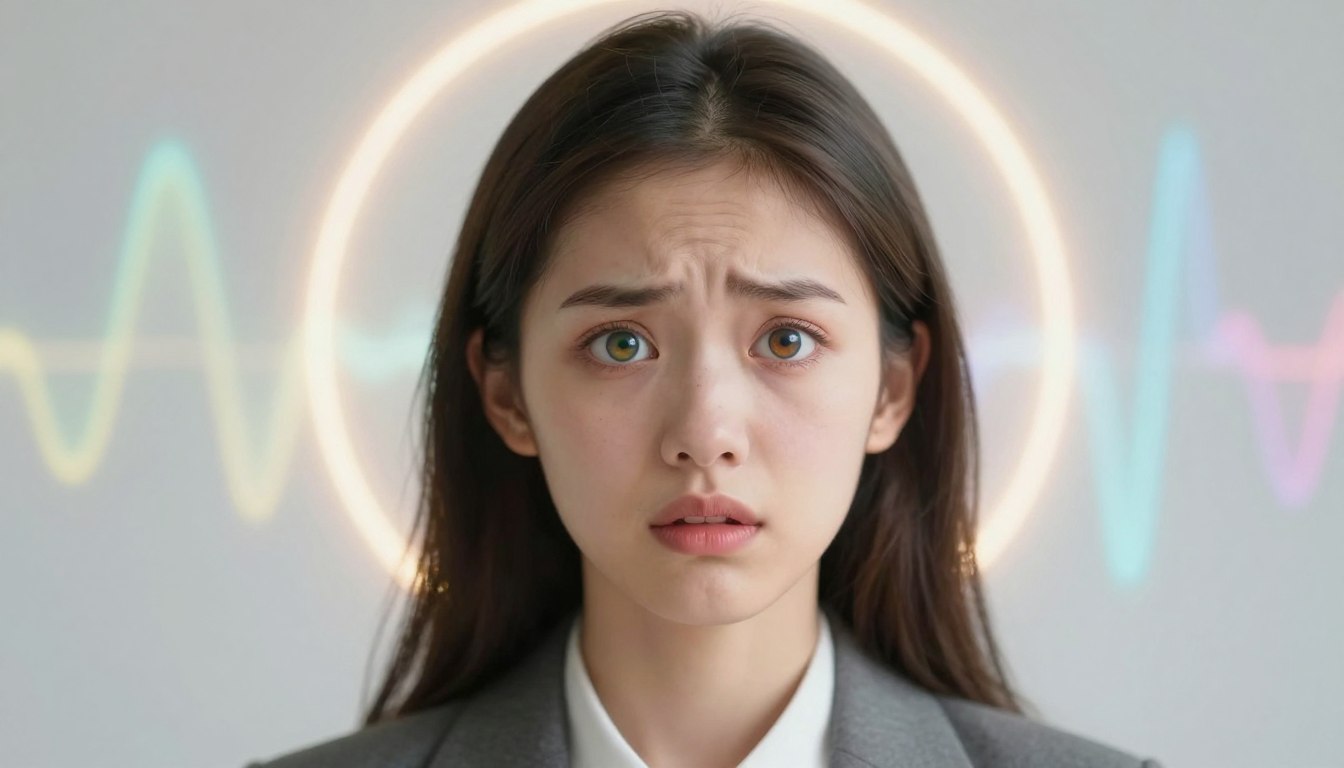
Micro expressions are quick, involuntary facial movements that show a person’s true feelings. They are very short, making them hard to capture without advanced ai girl emotion mapping techniques. Adding these subtle movements makes your digital character seem more real.
Layering these small movements over standard animations adds depth. This detail prevents the “uncanny valley” effect and keeps viewers interested. Here’s a comparison of standard and micro expressions in digital design.
| Feature | Standard Expression | Micro Expression |
|---|---|---|
| Duration | 0.5 to 4 seconds | 0.05 to 0.5 seconds |
| Visibility | Highly noticeable | Very subtle |
| Control | Voluntary/Intentional | Involuntary/Reflexive |
| Impact | Conveys basic mood | Reveals hidden intent |
Preparing Your Digital Canvas for Realistic Expressions
Your journey to capture a convincing ai girl emotion starts with setting up your digital canvas. First, make sure your base model is ready for detailed work. A good foundation helps avoid issues like unnatural skin stretching during intense moments.
Selecting the Right AI Model for High-Fidelity Faces
Choosing the right AI model is key for photorealistic results. You need a system that handles high-resolution textures and complex shapes well. Look for models with advanced blend shapes and enough detail to capture small facial movements.
High-fidelity faces need models that work in real-time and keep their shape. A well-set model can show a real ai girl emotion. Choose models with modular rigging for easy updates as your project grows.
Optimizing Mesh Topology for Facial Deformation
Good mesh topology is crucial for smooth facial movements. Create edge loops that match the facial muscles. This way, when the character smiles or frowns, it looks natural, not robotic.
Optimizing your mesh reduces the chance of unnatural movements. A well-made mesh allows for smooth, believable movements. This is key for keeping the ai girl emotion alive. Use the table below to see what’s needed for different levels of facial realism.
| Realism Level | Vertex Density | Topology Focus | Performance Impact |
|---|---|---|---|
| Stylized | Low | Basic Loops | Minimal |
| Standard | Medium | Anatomical Flow | Moderate |
| High-Fidelity | High | Muscle-Based | Significant |
| Photorealistic | Ultra-High | Micro-Deformation | Maximum |
Mapping Micro Expressions Step-by-Step
The secret to believable digital faces lies in the subtle dance of micro-expressions. These tiny, fleeting movements turn a static model into a living, breathing entity. Mastering expression mapping is key to blending digital art with human realism.
Identifying Key Facial Landmarks for Subtle Movement
To capture authentic ai girl emotion, start by isolating key facial landmarks. Focus on the corners of the eyes, the bridge of the nose, and the muscles around the lips. These areas show human emotion best during brief interactions.
Track these points with high precision to capture even the smallest twitch. Correctly mapping these landmarks lays the groundwork for realistic, organic movement.
Implementing Temporal Smoothing for Natural Transitions
After setting your landmarks, focus on movement flow. Temporal smoothing is key to avoiding jerky transitions between emotions. You want your character to move smoothly from a smile to a neutral expression.
“The soul of a digital character is found in the transition between expressions, not the expressions themselves.”
Use easing functions on your animation curves to mimic human muscle movements. This ensures every change in ai girl emotion feels real and intentional.
Avoiding the Uncanny Valley Through Subtle Timing
The uncanny valley happens when facial movements are too perfect or lack natural delay. To avoid it, add slight timing offsets. For example, the eyes should react a fraction of a second before the mouth.
| Expression Type | Primary Landmark | Timing Strategy |
|---|---|---|
| Micro-Smile | Lip Corners | Slow Ease-In |
| Surprise | Brow/Eyelids | Rapid Snap |
| Thoughtfulness | Pupil/Brow | Delayed Shift |
By managing these temporal nuances carefully, you keep your character believable. Consistent expression mapping helps your audience connect with the character on a deeper level.
Mastering Eye Detail and Ocular Realism
The eyes are the window to your digital character’s soul. To achieve realism, you need to go beyond static models. Emotional connection is heavily influenced by how these features interact with their surroundings.
Simulating Saccadic Eye Movements
Human eyes rarely stay on one spot for long. They make quick, jerky movements called saccades to scan the area. These movements help prevent your character from looking robotic or lifeless.
Make sure your rig includes small, involuntary movements even when focused. This constant motion is crucial for realism in animation. It mimics the need for the retina to refresh its image.
Refining Pupil Dilation and Iris Texture
The iris is not flat; it’s a complex structure that reacts to light and emotions. Adding depth to iris textures improves light refraction and realism. Use normal maps to simulate the eye’s intricate ridges.
Pupil dilation should match your character’s emotional state or the lighting. A sudden change in pupil size can show surprise or fear. This adds depth to your character’s performance, making the visual experience compelling.
| Feature | Static Approach | Dynamic Approach |
|---|---|---|
| Eye Movement | Fixed Gaze | Saccadic Jitter |
| Pupil Size | Constant | Reactive Dilation |
| Iris Detail | Flat Texture | Depth-Mapped Fibers |
| Visual Impact | Low realism | High realism |
Integrating Expression Mapping with AI Character Engines
For ai girl emotion mapping to work well, you need to link data streams to your rigging system. This direct connection lets your character react to its surroundings in real-time. It turns static models into living, breathing characters.
Connecting Emotion Data to Rigging Systems
To get realistic movements, map your data to bone controllers or blend shapes. Automation is crucial because manual keyframing can’t keep up with AI inputs. Use software that turns emotional data into facial movements.
When your rigging system gets these signals, it changes the character’s look instantly. This creates a loop where the character’s feelings show in its appearance. Here’s a look at how you can integrate these systems:
| Method | Latency | Complexity | Realism |
|---|---|---|---|
| Direct Bone Mapping | Ultra-Low | High | Excellent |
| Blend Shape Drivers | Low | Medium | Very Good |
| Physics-Based Simulation | Moderate | Very High | Superior |
Synchronizing Lip Sync with Emotional Context
Lip-syncing is more than just matching mouth shapes to sounds. It needs to understand the emotional context. For example, anger and joy require different mouth tensions. Your lip-sync engine should use emotional data to adjust these details.
“True digital performance emerges when the voice and the face speak the same language of emotion, creating a unified experience for the viewer.”
By adding emotional metadata to audio files, you can make the mouth rig show the character’s mood. This cohesive performance makes every word feel real and meaningful. When you get this right, your character will feel incredibly real to your audience.
Advanced Techniques for Realistic Skin and Muscle Simulation
To make your character look real, you need to understand skin and muscle mechanics. True realism goes beyond just textures. It’s about knowing how light interacts with tissue to make your digital character seem alive.

Simulating Subsurface Scattering for Skin Depth
Subsurface scattering makes light scatter inside a surface before it exits. This is key for convincing skin depth. It stops your character from looking like plastic or stone. Adjust your shader settings to let light bleed through thin areas like ears or nostrils.
With this technique, your skin will have a soft, organic glow. It will change with the lighting in your scene. For realism, make sure your scattering radius fits your character’s size.
Layering Muscle Micro-Movements Under the Surface
The way skin moves over muscle is crucial for a character’s look. Add micro-movements under the mesh to show the subtle tension of facial muscles. These small movements keep the face from looking static or robotic.
Use displacement maps or secondary rig controllers for detailed movements. This keeps your character realistic during intense emotions. Layering these movements makes your character’s surface complex and lifelike.
Tools and Software for Precision Emotion Mapping
Mastering industry-standard tools can improve your character’s performance. You need a strong software stack for expression mapping. This ensures every facial movement is accurately shown on screen.
Utilizing Unreal Engine for Real-Time Facial Tracking
Unreal Engine is a top choice for developers needing quick feedback. The Live Link plugin lets you stream facial data live. This means you can see your character’s reactions right away.
The engine makes it easy to fine-tune your expression mapping without long waits. You can tweak facial animations in real-time. This keeps your character looking natural and believable.
Leveraging Blender Geometry Nodes for Expression Control
Blender is great for those who like a procedural approach. Geometry Nodes let you create detailed, non-destructive rigs. This way, you can easily adjust facial deformations with unparalleled precision.
Nodes give you detailed control over facial movements. You can automate small details like eyelid twitches. This adds depth to your digital characters. It’s perfect for artists who value both speed and technical skill.
Troubleshooting Common Realism Issues
Your digital model might sometimes act in ways that break the realism you aim for. Even with advanced rigging, small technical mistakes can ruin the emotional connection with your audience. Fixing these problems early keeps your character believable in every scene.
Correcting Stiff or Robotic Facial Transitions
Facial movements that seem mechanical often stem from a lack of temporal smoothing between keyframes. If your character’s face moves abruptly from one expression to another, it looks fake. Adjust your interpolation curves to make transitions smooth and natural.
Using ease-in and ease-out functions on your animation curves can help. This makes facial movements feel more like real human expressions. By tweaking these curves, you bring back the realism that keeps viewers engaged.
Fixing Clipping and Mesh Distortion During Expressions
Mesh clipping happens when facial shapes overlap or go through the underlying geometry. This usually results from uneven skin weights on the character’s face. To fix this, carefully paint your weights to match the bone structure.
If painting doesn’t solve the problem, try corrective blend shapes for specific distortions. These shapes help when the face is in extreme poses. Keeping the geometry clean is key to maintaining realism during intense moments.
| Issue Type | Primary Cause | Recommended Fix |
|---|---|---|
| Stiff Motion | Linear Interpolation | Apply Bezier Curves |
| Mesh Clipping | Poor Weighting | Adjust Vertex Weights |
| Distortion | Extreme Posing | Add Corrective Shapes |
| Jittery Eyes | Tracking Noise | Apply Temporal Filter |
Testing Your AI Character for Emotional Authenticity
Testing for emotional authenticity is key to making your AI character relatable. It’s not just about how it looks. You need to make sure it communicates well and feels real.

Conducting User Perception Tests
Getting feedback from real people is crucial. Organize focus groups or online tests. Show short clips of your character and ask if they feel the emotions you intended.
Subjective feedback can catch issues that automated tests might miss. If people say your character feels “uncanny” or “cold,” you know to look at specific facial movements. This feedback is essential for making your ai girl emotion profile feel more natural.
Analyzing Frame-by-Frame Expression Accuracy
Looking at each frame of your animation is important. This lets you check if the character’s movements match the emotions you want to show. It helps you spot any awkward or jerky moments.
Pay close attention to the timing of small facial expressions. These quick movements are what add depth to your ai girl emotion. Make sure they follow a natural curve. Use a table to track your progress and keep improving.
| Testing Method | Primary Goal | Data Type | Frequency |
|---|---|---|---|
| User Focus Groups | Emotional Resonance | Qualitative | Bi-weekly |
| Frame Analysis | Technical Precision | Quantitative | Daily |
| A/B Comparison | Refining Nuance | Comparative | Monthly |
Regular testing keeps your character looking and feeling real. By using feedback from users and analyzing each frame, you’ll make sure your ai girl emotion stays engaging and true to life.
Best Practices for Maintaining Consistency Across Scenes
To achieve visual harmony, you need a strict plan for character behavior and how they interact with their environment. Keeping your character’s personality consistent is vital for audience immersion. A professional workflow demands strict standards to maintain your character’s emotional presence throughout the project.
Establishing an Emotional Baseline for Your Character
To ensure a believable performance, define a clear emotional baseline for your digital avatar. This baseline is the anchor point for all future movements. It makes your expression mapping predictable and authentic. Without it, your character might seem erratic or disconnected from the story.
Identify your character’s core personality traits. These traits guide how they react to different emotions. By documenting these standard responses, you create a guide for consistent animation. Consistency is the key to a strong connection between your character and the viewer.
Managing Lighting Effects on Facial Detail
Lighting is crucial for how your audience sees your work’s subtleties. If lighting changes a lot between scenes, the intricate details of your expression mapping might get lost. Always test your character rigs under different lighting to ensure the details are clear.
Use soft, directional lighting to show the depth of the skin and the precision of muscle simulations. Avoid harsh shadows that can hide the fine-tuned movements of the eyes or mouth. By managing these effects carefully, your expression mapping stays visible and impactful, no matter the scene’s setting.
Conclusion
To make digital characters seem real, you need to focus on the details. You now know how to make them come to life. It’s all about mixing small muscle movements with exact eye data.
Designing characters that feel real means watching people closely. Every tiny facial expression you add makes your characters more believable. Paying attention to the little things will make your work stand out.
Getting realism right is a never-ending journey. Keep using tools like Unreal Engine and Blender to make your characters move naturally. Your hard work will show in your future projects.
Begin using these techniques in your current projects. Show your work to others to get feedback and get better. Your next digital character could change how we connect in virtual worlds.
FAQ
What is the significance of the Facial Action Coding System (FACS) in digital character design?
The Facial Action Coding System (FACS) breaks down human emotions into Action Units (AUs). It helps you understand how muscles move. This makes animating digital characters more realistic, showing every small movement as it happens in real life.
How long do micro-expressions last, and why are they essential for authenticity?
Micro-expressions are quick, lasting from 1/25th to 1/5th of a second. They’re key for making digital characters seem real. They give the brain the small details it needs to see a character as alive, not just a model.
How can I prevent my character from falling into the “uncanny valley” during facial transitions?
To avoid the uncanny valley, use temporal smoothing. This makes facial changes smooth and natural. It prevents sudden movements that can make a character look fake.
What are saccadic eye movements, and how do they improve ocular realism?
Saccadic eye movements are quick, natural eye shifts. By adding these to your character, you make their eyes seem alive and attentive. This adds depth to their gaze, making it seem more intelligent.
Why is subsurface scattering (SSS) necessary for realistic digital skin?
Human skin lets light scatter beneath its surface. Using subsurface scattering in your rendering engine makes skin look natural and translucent. This, combined with muscle movements, creates a realistic look during expressions.
Which professional software tools are recommended for high-fidelity expression mapping?
Use Unreal Engine for facial tracking and Blender for advanced geometry. These tools offer the detailed control needed for precise expression mapping. They help achieve high-quality results in your animations.
How do I maintain emotional consistency across different scenes and lighting setups?
Start with an emotional baseline for your character. This “neutral” state is the reference for all reactions. Mastering lighting in Unreal Engine also helps highlight expression details, keeping the character’s personality consistent in any setting.
How can I troubleshoot stiff or robotic facial movements in my character?
Stiff movements often come from poor mesh topology or lacking secondary muscle simulation. Check your mesh for natural muscle contours. Analyze your animation frame by frame to spot unnatural timing. This helps refine movements for a more realistic look.