Hairstyle Prompts for Braids, Waves & Futuristic Looks
Ever wondered how digital artists make hair designs look so real? The secret is using ai girl hairstyle prompts to connect imagination with digital art.
Want to create mermaid waves or bold, futuristic styles? Your creativity knows no bounds. By improving your prompts, you can make your images look professional.
Knowing how digital art and hair design work together is key. This guide will teach you to create ai girl hairstyle prompts that bring your ideas to life.
Key Takeaways
- Learn to describe complex textures like braids and waves for better results.
- Discover how to simulate professional styling tools in your digital creations.
- Master the art of blending futuristic concepts with realistic hair physics.
- Improve your workflow by using precise descriptive language for your models.
- Gain the confidence to experiment with diverse and intricate hair designs.
Mastering the Fundamentals of AI Girl Hairstyle Prompts
Learning to create digital hair starts with understanding how AI sees your ideas. When you give clear instructions, the AI turns your words into detailed images. Knowing how these systems work lets you control the final look.
Understanding Prompt Engineering for Hair Textures
Good prompt engineering means thinking about hair’s physical traits. You need to talk about density, shine, and movement to get the AI to create realistic or creative hair. Without these details, the AI might make generic hair that lacks character.
“Precision in language is the bridge between a vague concept and a masterpiece of digital art.”
To get top-notch results, think about how these traits work together in your ai girl hairstyle prompts. Try different words to see how they change the hair’s look:
- Density: Use words like “voluminous,” “thin,” or “layered” to show thickness.
- Shine: Choose terms like “glossy,” “matte,” or “silky” to control how light reflects.
- Movement: Add words like “flowing,” “wind-swept,” or “static” to show how the hair moves.
Defining Key Descriptors for AI Girl Hair
It’s important to know the difference between hair types for your projects. Whether you want fine, coarse, or synthetic hair, your words guide the AI. Clear language ensures your ai girl hair looks great, no matter the model.
By focusing on these basics, you can build a reliable collection of styles. Knowing if the hair is natural or synthetic helps the AI get the light and movement right. This knowledge is crucial for improving your digital styling skills and getting consistent, professional-grade results every time.
Crafting Detailed Prompts for Intricate Braided Styles
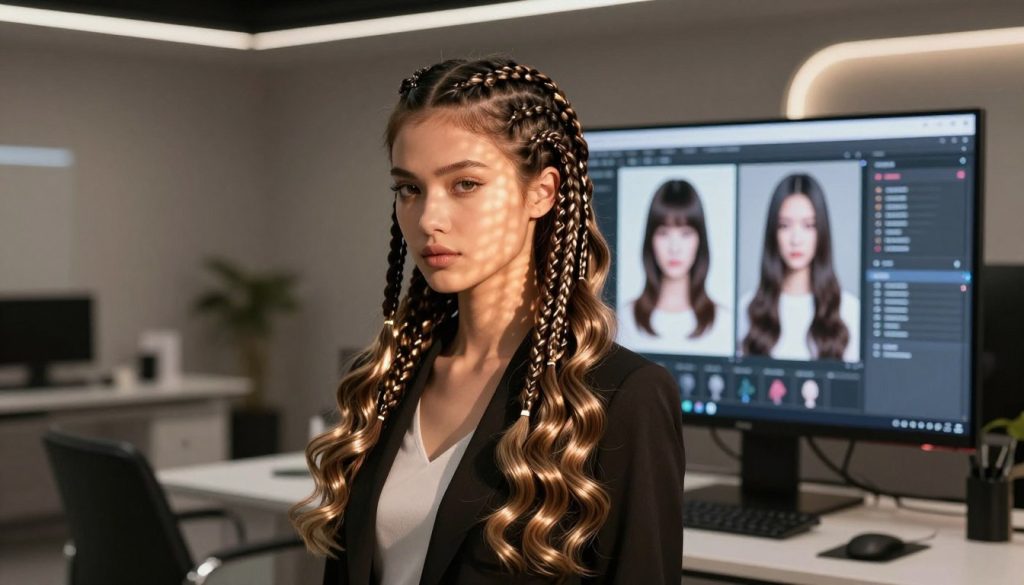
To create detailed braids for digital characters, you need to understand how AI sees hair. Focus on the hair’s structure to get sharp, clear ai girl hair images, not blurry ones.
Describing Braid Patterns and Complexity
For top-notch results, use clear terms to describe the hair weave. AI likes specific words that show the braid’s tightness and direction.
Here are some styles to include in your prompts:
- Fishtail braids: Great for a trendy, detailed look with tight, woven strands.
- Bantu knots: Best for styles that add cultural flair and interesting shapes.
- Dutch braids: Ideal for a three-dimensional look on the scalp.
Adding Texture and Volume Modifiers
Flat hair is a common problem with complex styles. Use volume modifiers to make the AI create deep and lifted strands.
For instance, Y2K space buns can get a boost from small braids. Mention “voluminous roots” or “thick, textured strands” to make the ai girl hair look lively.
Tips for Realistic Braid Lighting
Lighting is key to making braids stand out. Without it, the intricate details can get lost.
Include terms like “rim lighting” or “soft studio highlights” to highlight the braids. This helps the AI show the braids’ curves, making the ai girl hair look real and eye-catching.
Generating Effortless Waves and Beachy Textures
You can turn static digital portraits into stunning works of art by mastering effortless waves. Getting a realistic look is more than just a simple prompt. It’s about how hair moves in space. With the right approach, you can create fluid, lifelike movement that grabs the viewer’s attention.
Defining Wave Patterns and Loose Curls
To get the perfect look, focus on specific hair descriptors. Mermaid waves are great for a soft, sea goddess look. These patterns need loose, beachy textures for a relaxed, sun-kissed feel.
When writing your prompts, use terms like “undone waves,” “tousled curls,” or “soft beachy texture.” These help the AI understand the hair should be imperfect. Imperfection is the key to making digital hair look real and touchable.
“True beauty in art often lies in the subtle, organic flow of natural elements, where every strand tells a story of movement.”
Setting the Environment for Natural Hair Flow
The environment you describe is key to natural hair flow. To make hair look natural, give context for wind or movement. Phrases like “gentle ocean breeze” or “soft ambient lighting” help the model create hair that interacts with its surroundings.
Think about the background when setting hair flow. A chaotic or high-contrast background might need more defined waves. But a soft, blurred background is perfect for lighter, more ethereal textures that blend into the scene.
By tweaking these environmental details, hair becomes a dynamic part of the image. It reacts to the light and atmosphere you’ve created.
Designing Futuristic and Avant-Garde Hair Concepts
Avant-garde hair lets you explore beyond what’s natural. You can make otherworldly looks that lead the next wave of digital art. This means using materials not found in nature for a unique look.
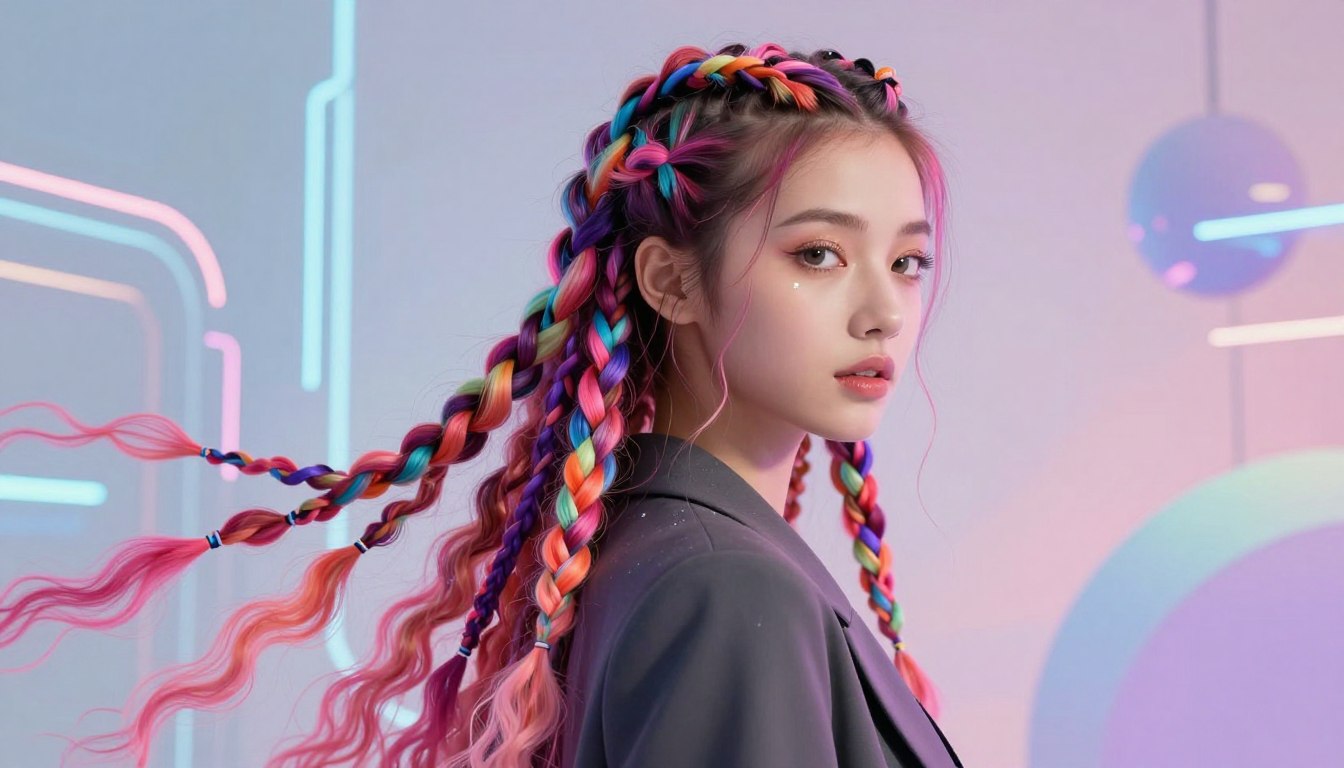
Incorporating Metallic and Neon Elements
To get a high-tech look, try light-emitting textures. Adding neon highlights to your designs can make them glow. This glow stands out against darker hair, drawing the eye to the character.
Metallic strands add a stiff, shiny appeal. Using brushed chrome or liquid gold brings a reflective quality. This quality is perfect with sharp, clean lighting that highlights the hair’s shine.
Experimenting with Geometric Shapes and Synthetic Materials
Digital fashion loves to play with form in new ways. You can ask for hair in precise geometric patterns, like hexagonal braids or round buns. These shapes bring a modern, artificial feel.
Think about using synthetic materials like fiber-optic cables or carbon fiber weaves. These add depth that regular hair can’t match. Mixing these with unique shapes takes your designs to high-concept levels.
Prompting for Cyberpunk and Sci-Fi Aesthetics
For a cyberpunk look, mix grit with tech polish. Use terms like bioluminescent fibers and holographic sheen to make your character’s hair seem like tech. This makes the hair feel like advanced tech, not just hair.
To create a sci-fi look, match your hair to your character’s world. A character in a neon city should have neon-colored hair. Layering these details makes your hair design a key part of a larger world.
Refining Your Hairstyle Prompt with Lighting and Color
Refining your hairstyle prompt opens up the world of vibrant, lifelike textures. Lighting and color are the final touches that make a flat image pop. They turn a simple image into a professional, high-quality hair representation.
Selecting Color Palettes for Different Hair Types
Choosing the right color palette is key to defining your hair design’s character. Whether you want natural tones or bold, avant-garde shades, the color must match the texture in your hairstyle prompt. Try multi-tonal highlights for a sense of movement and realism.
For a touch of whimsy or high-fashion flair, add unique accents. Products like iHeart Lunautics Supernova Glitter can add stunning glitter roots. Here are some tips for choosing colors:
- Use cool-toned palettes for sleek, futuristic styles.
- Incorporate warm, golden hues to enhance beachy waves.
- Apply high-contrast highlights to define individual strands in complex braids.
Using Lighting Modifiers to Enhance Hair Depth
Lighting is crucial for creating depth and dimension in your hair. Without the right light, even detailed hairstyle prompts can look dull. Use modifiers to control where light hits, creating natural shadows and highlights.
“Light makes photography. Embrace light. Admire it. Love it. But above all, know light. Know it for all you are worth, and you will know the key to photography.”
By specifying light sources like rim lighting or soft studio lighting, you can highlight hair volume. These modifiers help the AI understand light’s interaction with textures. This ensures your final work looks polished and intentional. Mastering these elements will improve your work quality consistently.
Optimizing AI Girl Hair for Different Image Generators
Every AI model has its own way of showing hair. What works in one might not in another. Knowing what each platform needs helps keep your work consistent.
Adjusting your input lets you control hair textures in your images. It’s about using the right commands to tell the AI what to do.
Adapting Prompts for Midjourney
Midjourney uses natural language and specific settings. For stunning hair detail, put key words first. Using “–stylize” or “–weird” can change how hair looks.
Try different aspect ratios to get the hair right. Consistency is key when you’re working on a look. Remember, Midjourney sees adjectives as part of the whole picture.
“Precision in your input is the bridge between a vague concept and a masterpiece of digital rendering.”
Adjusting Syntax for Stable Diffusion
Stable Diffusion needs a technical touch, like token weighting for hair details. Use parentheses or brackets to tweak your prompt. This lets you adjust braids or waves precisely.
Stable Diffusion likes a structured prompt. Using negative prompts helps avoid mistakes. By getting the syntax right, your hair looks sharp and professional every time.
Building Your Personal Hairstyle Lookbook
Creating a special place for your favorite hair designs can change your creative process. A lookbook is like a central spot where you keep all your top hairstyle prompts. It helps you keep your best ideas ready for future projects.
Organizing Your Best Prompt Variations
Keeping things organized is crucial for a productive workspace. Sort your work by style, like braids or waves, to find what you need fast. A digital lookbook lets you tag each hairstyle prompt with details like lighting or color.
Use tools like Notion, Trello, or a spreadsheet to manage your work. Consistency in how you organize makes it easier to find what works best. This way, you can focus more on creating and less on searching.
Iterating on Successful Hair Concepts
With a solid base, start improving your style by trying new things. Take a hairstyle prompt that works well and change one thing at a time. This helps you see how small changes affect the look.
Don’t hesitate to experiment with new textures or patterns. By comparing your new work to what’s in your lookbook, you can see how far you’ve come. This cycle of trying and documenting is key to getting better at digital art.
Troubleshooting Common AI Hair Generation Issues
Getting perfect results with ai girl hair can take some tweaking. Even top models can have unexpected glitches. Knowing how to spot these problems helps you fix them fast.
Fixing Artifacts and Unnatural Strands
Artifacts show up as stray pixels or hair that doesn’t belong. They often come from too complex prompts or mixed style tags. To fix this, make your prompts simpler and focus on the key hairstyle features.
Here are some tips to improve your results:
- Use negative prompts to avoid unwanted features like “extra limbs” or “deformed.”
- Try changing the seed number to see if it removes the glitch.
- Lower the weight of style modifiers that might be causing the issue.
Correcting Hair Color Bleeding and Texture Blurring
Color bleeding happens when hair color mixes with the background. This is often due to the AI having trouble separating the subject from the background. To fix it, clearly state the hair color in your prompt and use stronger weight modifiers for texture.
Texture blurring makes hair look flat. This means the model needs more detail guidance. Here’s a quick fix for common problems:
| Issue | Primary Cause | Recommended Fix |
|---|---|---|
| Color Bleeding | High contrast background | Use “sharp focus” and “defined edges” |
| Texture Blurring | Low resolution input | Increase sampling steps |
| Unnatural Strands | Conflicting style tags | Simplify prompt structure |
By tackling these issues, your ai girl hair designs will stay sharp and professional. Remember, small tweaks can make a big difference. Keep trying and you’ll get better at using AI image generation.
Advanced Techniques for Professional Hair Rendering
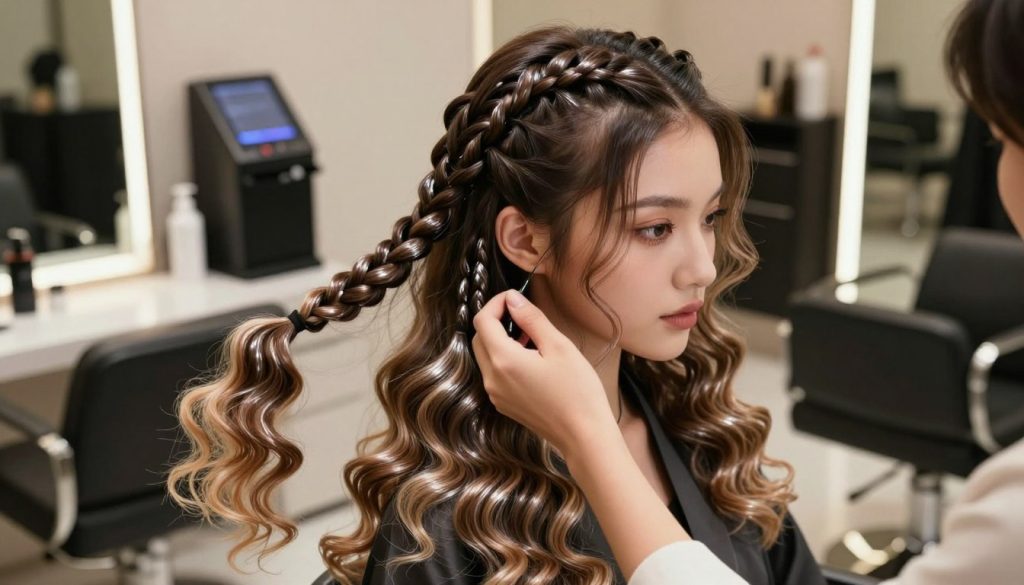
To improve your hair generation skills, you need to learn advanced techniques. By going beyond basic inputs, you can create high-fidelity textures that look like real photos. To get better at ai girl hairstyle prompts, you must understand how the model sees complex images.
Layering Multiple Style Modifiers
To add depth, stack descriptive modifiers on top of each other. Use a mix of lighting, material, and structural keywords for a layered composition. This way, every hairstyle prompt gives the AI enough info to render each strand accurately.
Try mixing terms like “volumetric lighting,” “anisotropic highlights,” and “hyper-realistic silk texture” to see their effects. Layering these modifiers makes the generator work harder to get light right across the hair. This leads to a more natural and professional look than simple tags.
“The secret to great digital art lies in the details that most people overlook; precision in your parameters is the bridge between a good image and a masterpiece.”
Using Negative Prompts to Clean Up Hair Details
Even the best ai girl hairstyle prompts can sometimes have unwanted artifacts or blurry textures. Negative prompts are the best way to clean up your composition and get rid of stray, unnatural strands. By telling the generator what not to do, you control the final look better.
Put terms like “blurry,” “fused strands,” “low resolution,” and “clumpy texture” in your negative field. This tweak acts as a quality filter for your hairstyle prompt. It makes sure the AI focuses on sharp, clear edges. Getting good at these negative constraints is key to professional-level rendering and will make your work more consistent.
Conclusion
You now have the skills to turn simple text into detailed hair designs. Learning these skills lets you use tools like Midjourney and Stable Diffusion with ease.
Creating a personal lookbook is key for your future projects. It’s a collection of your best prompts. This helps you grow your artistic style and keep your designs consistent.
Practice is the best way to get better. Try new things like different modifiers and lighting. This will make your work stand out. Your ability to keep improving will keep your digital portraits looking great.
Use these tips for your next project. Your audience will love the depth and realism in your characters. Let your creativity shine as you make amazing visuals for the future of AI-generated hair.
FAQ
How do I begin crafting an effective hairstyle prompt for digital characters?
To start, define the hair’s texture, length, and style. Use specific terms like “layered wolf cut” or “sleek high ponytail.” This gives the AI a clear guide.
Adding keywords related to ai girl hair helps focus on feminine hair details. This ensures the hair looks right.
What modifiers ensure that intricate braids like Bantu knots or fishtails render clearly?
For detailed braids, use technical words to avoid blurring. Mention “tightly interlaced” and “defined sections” for clear patterns.
For Bantu knots, say “protection style” and “symmetrical sectioning.” For fishtail braids, use “tapered edges” and “intricate weaving.”
How can I create natural-looking waves that don’t appear static?
For realistic waves, describe how the hair interacts with the environment. Say “wind-blown mermaid waves” or “crimped texture with sea-salt spray effect.”
This helps the AI capture the hair’s motion and authenticity.
What is the best way to design futuristic or avant-garde hair concepts?
For futuristic looks, use materials like “liquid metallic sheen” or “neon fiber-optic strands.” Try “geometric silhouettes” and “synthetic polymer textures” for a high-fashion vibe.
How do lighting and color modifiers transform a basic hair generation?
Lighting adds depth to ai girl hair. Use prompts for “rim lighting” or “soft cinematic glow” to highlight strands.
For color, use terms like “balayage” or “glitter roots.” This adds sophistication, like in professional ads.
Are there specific syntax adjustments needed for Midjourney versus Stable Diffusion?
Yes, each platform has its own way. Midjourney likes descriptive language and stylistic suffixes like “–v 6.0.”
Stable Diffusion might need weighted tags and specific parentheses. This ensures the right hair texture.
Why should I maintain a personal hairstyle lookbook for my AI projects?
A lookbook is a key reference for your best styles. It helps you replicate and improve complex looks. This way, you can develop a unique style for your digital models.
How can I use negative prompts to fix artifacts and unnatural hair strands?
Negative prompts help clean up messy details. Include terms like “fused hair” or “stray strands” in your prompts. This tells the AI to avoid these issues, making the image cleaner.
What advanced techniques can I use to layer multiple style modifiers?
To create a complex look, layer modifiers with commas. Prioritize the most important features first. For example, “extra long mermaid waves, pastel lavender ombre, soft backlighting, hyper-realistic texture” works well.