Camera Framing Tricks to Sell the Simulation
Ever wondered why some digital portraits seem so real, while others look fake? The answer often lies in how you frame your shot. Learning professional photography techniques can make a big difference. It helps turn a simple image into something that looks like a real person.
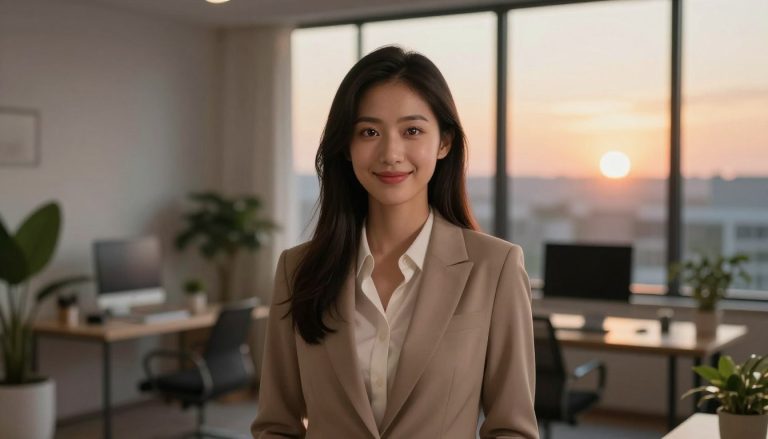
Platforms like Instagram now ask you to log in to see content. This makes it harder for people to see your work. So, your images must grab attention right away. Using ai girl camera framing helps guide the viewer’s eye. It creates depth that feels like high-end studio work.
By using cinematic principles, you can turn basic digital images into something amazing. This guide will show you how to take your work from simple to a masterpiece of digital realism.
Key Takeaways
- Understand how composition influences the perceived authenticity of digital subjects.
- Learn why high-quality visuals are critical for platforms with strict login requirements.
- Discover how to use depth of field to create a cinematic look.
- Master the art of guiding viewer attention through intentional visual balance.
- Elevate your digital projects by applying professional photography standards.
Understanding the Role of Composition in AI Imagery
Composition is like a secret language that tells your audience what to see in your digital images. By placing elements just right, you turn a simple image into a believable work of art. The right ai girl camera techniques help guide the viewer’s eye exactly where you want it to go.
Why Framing Matters for Realism
Good framing makes a big difference between a dull image and a cinematic portrait that feels real. Without the rules of composition, your subject might seem out of place. By adjusting your framing, you add depth, making your digital subject seem like a real person.
Many creators see their work improve when they treat their virtual space like a real studio. This mindset helps avoid common mistakes like bad cropping or messy backgrounds. A well-composed shot keeps the viewer focused on the character’s face, not distractions.
The Psychology of Cinematic Perspective
The perspective you choose affects how your audience feels about the character. A low angle can make someone look powerful, while a high angle shows vulnerability or closeness. Knowing these effects is key for creating a professional look on Instagram.
Matching your perspective with the scene’s mood strengthens your connection with the audience. This cinematic approach turns a still image into a story. Here’s how different framing choices change how your subject is seen.
| Framing Technique | Psychological Impact | Best Use Case |
|---|---|---|
| Eye-Level | Neutral and relatable | Standard ai girl camera portraits |
| Low-Angle | Authoritative and strong | Heroic or cinematic character reveals |
| High-Angle | Vulnerable and soft | Intimate or emotional storytelling |
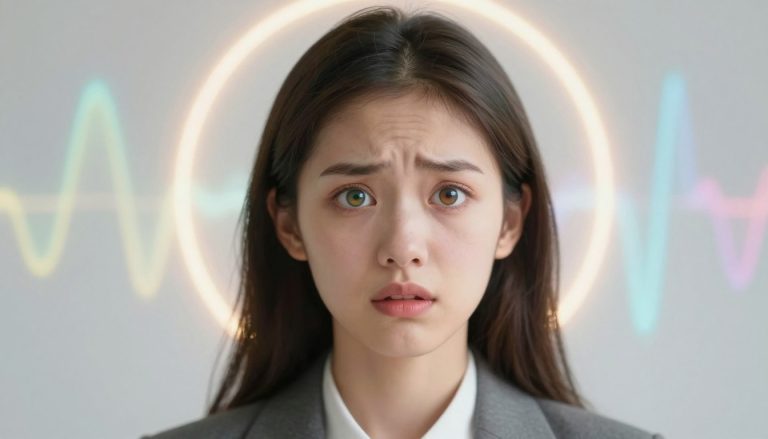
| Close-Up | Intense and personal | Focusing on facial expressions |
Mastering AI Girl Camera Framing Techniques
Great composition turns a simple AI image into a powerful visual story. By focusing on ai girl camera framing, you create art that speaks to viewers. It’s all about balancing your subject with the environment.
Applying the Rule of Thirds to Digital Subjects
The rule of thirds avoids the boring center placement. It divides your frame into a 3×3 grid. This makes your subject more engaging.
Here’s how to use it:
- Put your subject’s eyes on the top line for an immediate connection.
- Align their body with a vertical line for movement or depth.
- Use empty grid squares for context.
This method makes your ai girl camera framing intentional. It balances your digital subjects, making them seem more real.
Utilizing Leading Lines to Direct Viewer Attention
Leading lines guide the viewer’s eye to your subject. They can be fences, hallways, or tree branches.
These lines control the image’s flow. You want the viewer to smoothly move to the focal point.
Here are some tips:
- Converging lines: Paths or walls meeting at the subject focus attention.
- Natural curves: Use flowing shapes for a gentle eye lead.
- Geometric framing: Doorways or windows isolate your subject.
Mastering these techniques lets you control how your audience sees your work. Thoughtful framing is key to professional digital photography.
Selecting the Right Focal Length for Your Simulation
Mastering focal length lets you control space and perspective like a Hollywood pro. You decide what part of the scene to show and how subjects relate to their world. This choice is key to making your AI projects look cinematic.
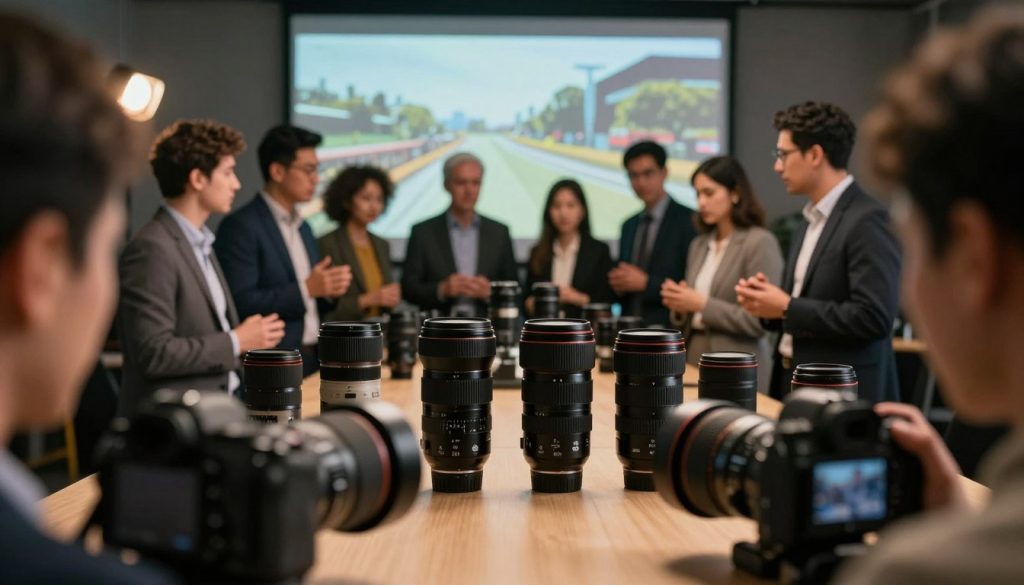
Wide-Angle Lenses for Environmental Storytelling
Wide-angle lenses are great for showing off a scene. They capture more of the environment, perfect for big landscapes or detailed rooms. This makes your scene feel big and immersive, pulling the viewer in.
Telephoto Lenses for Portrait Depth and Compression
Telephoto lenses are best for capturing emotions in portraits. They make your subject stand out by compressing the background. This creates a close-up feel that looks professional and detailed.
Creating Bokeh Effects to Isolate Your Subject
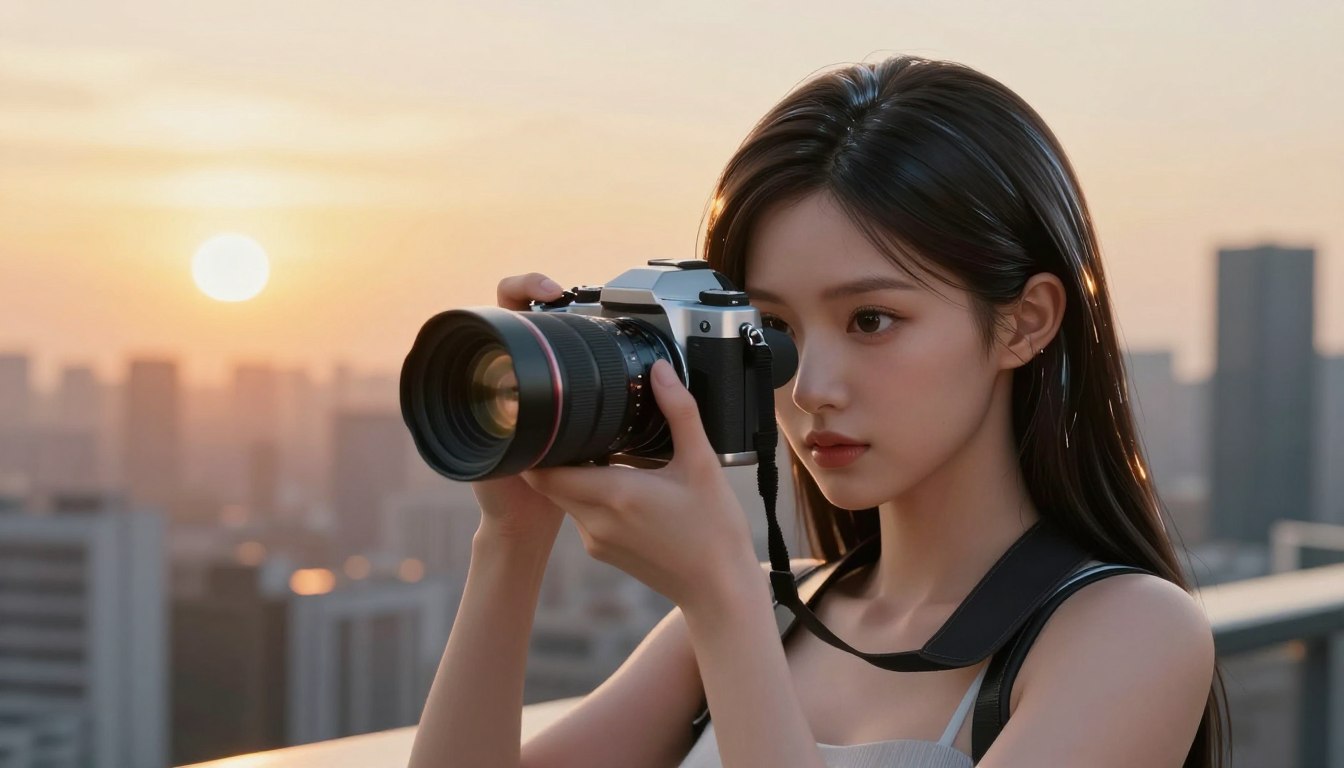
To focus on your subject, use a shallow depth of field, or bokeh. A wide aperture and telephoto lens blur the background, making it a soft, colorful mess. This cinematic touch keeps the viewer’s eye on your main subject.
| Lens Type | Best Use Case | Visual Impact |
|---|---|---|
| Wide-Angle | Environmental shots | Expansive and immersive |
| Standard | Natural perspective | Balanced and realistic |
| Telephoto | Portrait photography | Compressed and intimate |
| Macro | Detailed close-ups | Highly focused and sharp |
Knowing about focal lengths lets you control your digital story. Try different settings to improve your cinematic style and make your AI images more impactful.
Establishing Depth of Field for Cinematic Realism
Depth of field is key to turning a simple digital image into a cinematic work of art. It controls where the viewer’s eye goes first. This skill is crucial for achieving a ai girl camera look that rivals professional photos.
Simulating Aperture Settings in AI Prompts
To change the look of your virtual lens, add specific terms to your prompts. For a shallow depth of field, use “f/1.4” or “f/1.8”. This makes the background soft and creamy, perfect for focusing on your subject.
For sharp backgrounds, use higher f-stop numbers like “f/11” or “f/16”. This is great for shots where you want the background to be clear. Remember, your ai girl camera settings set the mood of your image.
Managing Foreground and Background Blur
To add depth, manage blur well. Blurring the background and foreground makes the sharpest part stand out. This makes your images look more real and less flat.
To get this effect, ask for a “shallow depth of field” or “bokeh effect”. This helps separate your subject from the background. By mastering these settings, your images will look as good as professional photos. Use the table below to pick the right aperture for your shot.
| Aperture Setting | Focus Range | Best Use Case |
|---|---|---|
| f/1.2 – f/2.0 | Very Shallow | Close-up portraits |
| f/2.8 – f/5.6 | Moderate | Street photography |
| f/8.0 – f/16 | Deep | Landscape scenes |
Camera Angles and Their Impact on Character Presence
The angle of your virtual camera tells a story without words. By changing the camera’s height, you show how the audience sees your character. These small changes turn a still image into a compelling narrative experience.
Low-Angle Shots for Authority and Power
Positioning the camera below the subject’s eye level shows dominance and strength. This makes the viewer look up, seeing the character as powerful. It’s great for making AI characters seem heroic or intimidating.
Use this angle to highlight a character’s leadership or physical presence. The camera’s tilt adds a monumental quality, making the subject seem bold and untouchable.
High-Angle Shots for Vulnerability and Intimacy
Putting the camera above the subject makes them appear vulnerable. This angle makes the character seem smaller or less powerful. It’s perfect for scenes that need a softer, more emotional touch.
High-angle shots make the viewer feel protective or empathetic. By making the character seem smaller, you show their inner fragility and emotions.
Eye-Level Framing for Relatable Human Connection
Eye-level framing is the best for creating a relatable human connection with the audience. It makes the viewer feel equal and neutral. This angle removes power dynamics, allowing for a more personal connection.
This method is great for portraits or scenes where trust and familiarity are key. It makes the viewer feel personal and grounded in the character’s world.
| Camera Angle | Primary Emotional Effect | Best Use Case |
|---|---|---|
| Low-Angle | Authority and Power | Heroic or intimidating figures |
| High-Angle | Vulnerability and Intimacy | Emotional or submissive scenes |
| Eye-Level | Relatable Connection | Standard portraits and dialogue |
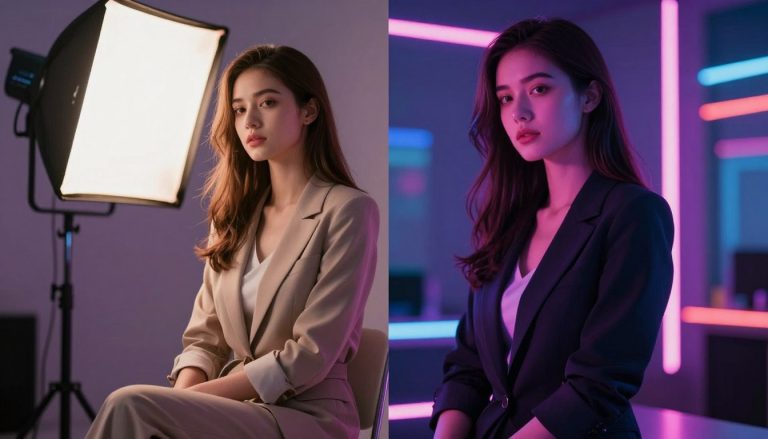
Lighting and Framing Synergy
You can turn a simple image into a cinematic masterpiece by combining light and frame. When these elements work together, your AI images look real. Getting this balance right makes all the difference.
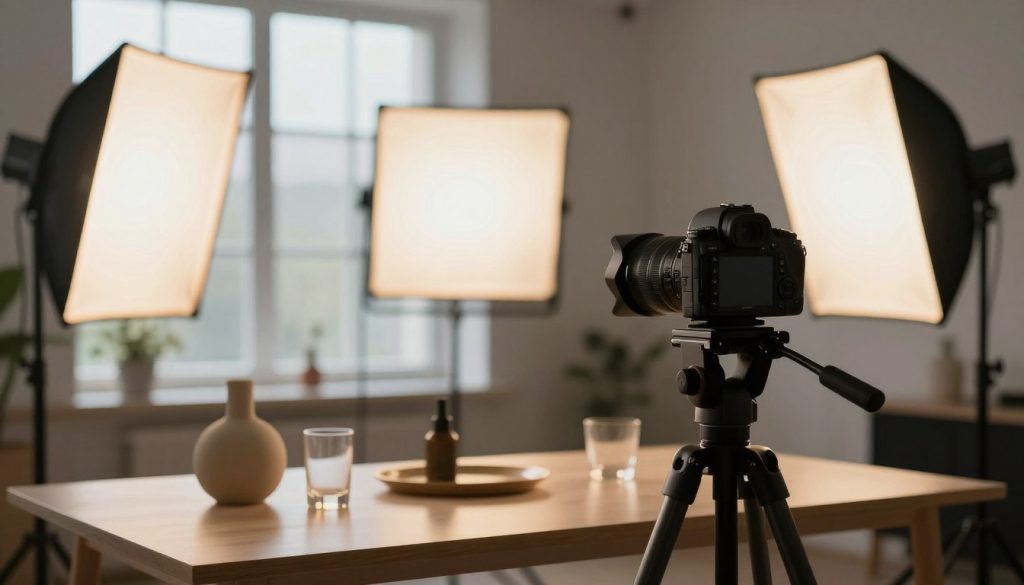
Positioning Your Subject Relative to Light Sources
Where you place your subject next to the light source changes how the scene looks. By placing your subject at an angle to the light, you get natural-looking highlights. This makes facial features and body shapes stand out.
Think about the light’s direction when setting up your scene. Light from behind creates a rim-lighting effect. This strategic positioning gives your image a professional look, like high-end photography.
“Light makes photography. Embrace light. Admire it. Love it. But above all, know light. Know it for all you are worth, and you will know the key to photography.”
Using Shadows to Define Frame Boundaries
Shadows are more than just dark areas; they help shape your image. Deep shadows can frame your subject, guiding the viewer’s eye. This adds a sense of mystery and cinematic depth.
Place your subject where light and dark meet. Shadows can create a natural vignette, keeping focus where you want. This makes your composition feel real and grounded in real-world physics.
Advanced Framing Tricks for Dynamic Scenes
Learning to arrange complex visuals lets you explore new limits in AI storytelling. Moving beyond simple shots opens up fresh ways to make your work stand out. The right framing can turn a basic image into a powerful story.
Implementing Dutch Angles for Tension
A Dutch angle tilts the camera, making the horizon line not parallel to the frame’s bottom. This creates a feeling of unease or confusion. It’s great for showing something’s amiss or a character’s stress.
To get this look in your AI prompts, ask for a “tilted camera angle” or “canted perspective.” This breaks the usual framing rules, making the scene more engaging. It’s perfect for action or thrillers.
Using Negative Space to Evoke Emotion
Negative space is the empty area around your subject. Leaving some space makes your character seem more alone or vulnerable. This framing choice helps focus the viewer’s attention.
It leads the eye to the subject’s face, creating a minimalist aesthetic. This makes the scene feel thoughtful and impactful. By balancing subject and background, you stir emotions that linger.
Refining AI Girl Camera Settings for Consistency
Consistency is key for a strong visual brand with synthetic media. Your audience wants to see a unified look in all your images. Getting your ai girl camera settings right makes your character easy to spot, no matter the scene or pose.
Balancing Aspect Ratios for Cinematic Output
Picking the right aspect ratio is crucial for a cinematic look. A square format is good for some social media, but wider ratios offer a more film-like feel. Try 16:9 or 21:9 to add scale to your project.
Think about where your audience will see your work. Mobiles might need vertical 9:16, while desktops do better with horizontal. Finding the right balance ensures your work looks great everywhere.
Maintaining Consistent Framing Across Image Sets
To build a strong brand, keep your subject’s placement consistent. A consistent ai girl camera framing style helps viewers focus on the character, not technical issues. Use specific focal lengths and distances for main shots.
Strategic repetition is your secret to success. Reusing similar framing styles across images creates a polished, intentional look. This level of control sets professionals apart from hobbyists in digital media.
Common Framing Mistakes to Avoid
Even the most skilled digital artists sometimes struggle with visual composition. Ignoring the basic rules of framing can make images lose their realism and polish. Spotting these mistakes early helps keep your work believable and striking.
Avoiding Unnatural Subject Placement
One common mistake is placing subjects in a way that feels off. If a character seems to float or lacks a clear connection to the background, your framing looks amateurish. Always make sure the subject interacts naturally with their surroundings.
To keep your compositions grounded, watch out for these common traps:
- Placing the subject too close to the edge, which creates a cramped feeling.
- Ignoring the horizon line, which can make the entire scene look tilted or unstable.
- Overcrowding the frame with unnecessary elements that distract from the main subject.
Correcting Distorted Proportions in Close-Ups
Close-up shots often have technical issues that distort facial features. When the camera is too close, the framing can make certain parts of the face look unnatural. Adjust your focal length settings to keep the character’s features in proportion.
Consistency is key in portraits. If features look stretched or compressed, try pulling the camera back and using a slight zoom. This simple change helps keep your subject’s natural appeal while focusing where you want.
Post-Processing Adjustments to Enhance Framing
Your journey to the perfect image doesn’t end when the render finishes. Sometimes, the last touches to perfect your framing come after the software is done. These small tweaks are what turn a raw render into a professional-grade visual.
Cropping for Better Composition
Cropping is a great way to improve your subject’s balance in the frame. Even if your initial setup was good, a small tweak can remove distractions. Strategic cropping helps stick to the rule of thirds or get rid of unwanted space.
Tools like Adobe Lightroom or Photoshop let you re-center your subject. This makes your framing tighter and more focused. It guides the viewer’s eye exactly where you want it.
Adding Cinematic Overlays and Grain
To get a cinematic look, add subtle textures to your image. Film grain makes AI renders feel more real and less digital. It softens the sharpness that AI models often have.
“The final polish is where the soul of the image is truly captured, turning a simple digital file into a piece of art that tells a story.”
Light leaks or color grading overlays can also enhance your scene’s mood. These additions give your work a cinematic feel. When done right, they add depth and history to your digital art.
| Adjustment Type | Primary Benefit | Visual Impact |
|---|---|---|
| Crop | Refines framing | High |
| Film Grain | Adds texture | Medium |
| Color Grading | Enhances cinematic mood | High |
Conclusion
Learning to frame your camera shots can turn simple AI images into stunning stories. You now know how to play with perspective, depth, and layout for top-notch results.
Using these skills every time helps you create a unique style that people love. Every tweak you make makes your digital images feel more real.
Trying new things is key to getting better. Try these tips on different tools like Midjourney or Stable Diffusion. See how small changes can make a big difference in your work.
Begin using these framing tips in your next project. You have the power to make visuals that grab attention. Keep exploring and creating to make work that truly amazes people.
FAQ
How does precise framing improve the realism of my AI-generated characters on Instagram?
Precise framing is like the skeleton of your image. It makes it look more like a movie than a digital picture. On Instagram, where people scroll fast, high-quality images grab their attention. Using AI like a real camera makes your images believable and engaging.
What is the benefit of using the Rule of Thirds for an AI girl camera setup?
The Rule of Thirds divides your image into a grid. It helps your AI subjects look more alive and interesting. By placing them off-center, you create a dynamic look that draws the viewer’s eye, just like in professional photos and movies.
Which focal length should I prompt for a professional AI portrait?
For a classic look, use a Telephoto lens (85mm to 135mm). It makes faces look good and adds a nice blur in the background. For scenes, a Wide-Angle lens (24mm or 35mm) works well, but watch out for distortion.
How can I simulate a shallow depth of field in AI prompts?
To get a shallow depth of field, include aperture settings like f/1.8 or f/2.8 in your prompts. This makes your subject sharp and the background soft. It’s key for a movie-like feel, separating your subject from the background.
How do camera angles change the psychological impact of my AI subject?
Camera angles affect how we feel about your character. Low angles make them seem powerful, while high angles show vulnerability. For a real connection, use eye-level framing, making the viewer feel like they’re right there with your AI.
What is a Dutch angle, and when should I use it in AI imagery?
A Dutch angle tilts the camera for tension or unease. It’s great for dynamic scenes but not for everyday portraits. It’s a powerful tool for adding drama to your AI images.
How do I maintain framing consistency across an entire set of AI images?
To keep your digital persona believable, use the same framing and settings for all images. Stick to the same aspect ratios and focal lengths. This ensures your AI looks consistent in every shot.
What are the most common framing mistakes to avoid in AI generation?
Avoid cutting off limbs or distorting faces in close-ups. Make sure your prompts are clear about the shot type. This helps avoid AI errors and keeps your images looking natural.
Can I use post-processing to fix the framing of a generated image?
Yes, you can. Tools like Adobe Photoshop let you crop or add more space. Adding film grain or overlays can also enhance your image, making it look more cohesive.